


How to Choose the Right Masking Tape for Your Project in 2026
 Nov 09, 2026|
 View:15
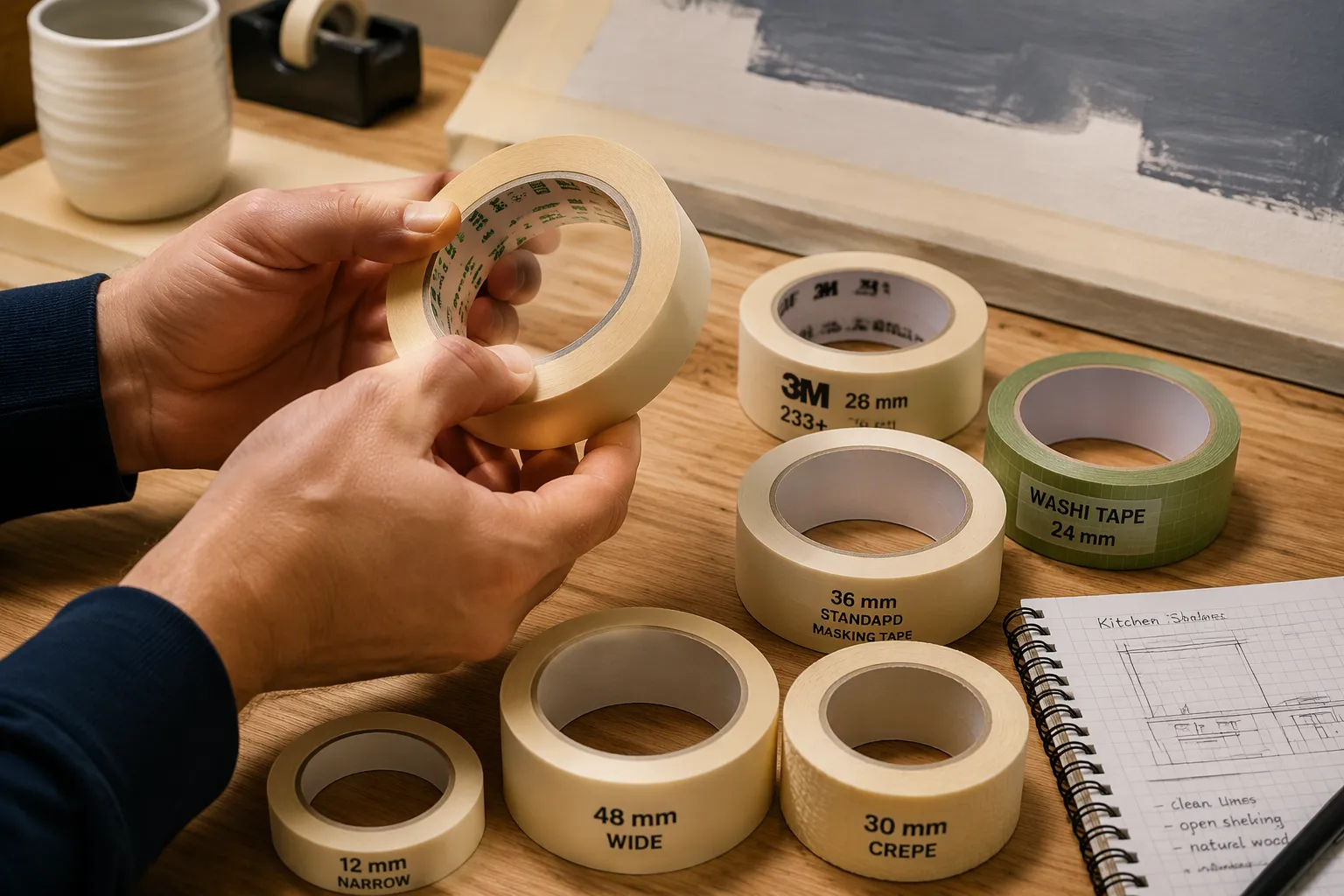
Choosing the right tape comes down to a short list of factors: surface type, paint type, how long the tape stays on, application area, width and thickness, and temperature exposure. Tape formulations keep moving. Semi-crepe and washi paper backings now sit alongside traditional crepe, and low-VOC adhesive systems appear in more product lines. This masking tape guide works through each factor in order, then turns the criteria into practice with bleed control, residue prevention, and a selection chart. The payoff is simple: clean lines, no bleed, no residue, and no rework.
Key Takeaways
Match tape to surface type: choose a low-tack masking tape for delicate finishes and standard crepe paper tape for walls, glass, and furniture.
Check the removal window: general purpose tape removes cleanly within 24–72 hours, while painter's tape can stay up to 14 days.
Prevent paint bleed by pressing the tape edge firmly and sealing it with a thin coat of the base color before the topcoat.
Set width and thickness by the job: wider rolls for large areas and long runs, narrower rolls for curves and detail work.
Test a short strip first to confirm clean removal and avoid residue or surface damage.
Masking Tape vs. Painter's Tape
What Masking Tape Is Designed For
Masking tape is a pressure-sensitive paper tape built for temporary hold. Its job is color separation, bundling, tabbing, light packaging, and general surface protection. The common construction pairs a crepe paper carrier with a rubber-based adhesive. Crepe paper tears easily by hand and stretches slightly, so the tape follows curves and irregular edges without creasing.
The masking label describes an action, not a single product. In professional settings the term refers to shielding an area from paint, chemicals, or environmental exposure. Performance is judged on conformability, solvent resistance, and clean removal after heat or UV exposure. Adhesion is not a fixed number either. It depends on how clean, rough, or curved the surface is, and on the temperature at the moment of application, as industry guidance on tape selection[1] points out. Adhesive strength and bond duration remain the two distinctions worth checking before you buy.
Key Differences From Painter's Tape
The differences between masking tape and painter's tape come down to tack and dwell time. Masking tape carries the stronger adhesive with a short clean-removal window, while painter's tape uses lower tack and stays on longer without residue. Painter's tape is engineered for application windows of up to 14 days, and most standard lines rate 1 to 14 days of clean removal depending on the product. Masking tape suits same-day work: color separation, tabbing, and short masking runs that come off before the adhesive sets.
Backing material adds another layer. Washi paper is flatter than crepe, which limits paint bridging at the tape edge and delivers sharp lines on precision work. Crepe paper is slightly more flexible, so it conforms better to curved surfaces. Semi-crepe sits between the two, with more body than washi and more give than standard crepe. None of the three is inherently superior; each fits a specific job. The practical takeaway is to match adhesive strength and removal window to the task, then choose the carrier that suits the surface geometry.
Choosing the Right Masking Tape: Key Criteria
Surface, Paint, and Duration
Surface type drives the first decision. Masking tape for delicate surfaces has to start from a low-tack adhesive, because a strong adhesive can pull away paint or veneer on removal. Ordinary painter's tape already uses medium adhesion, yet even that can prove too strong for fragile surfaces, so low-adhesion grades labeled for delicate use are the safer choice. Several low-tack masking tape lines now rate clean removal over 30 to 60 days on wood floors, furniture, wallpaper, and freshly painted walls, though the label window is what counts. For walls, furniture, and glass, standard crepe paper tape removes without residue and costs less.
Paint type and dwell time form the second filter. Solvent-based coatings, lacquers, and waterborne paints each stress the adhesive differently, and low-VOC waterborne systems have become common enough that adhesive suppliers now publish compatibility data for them. Estimate how long the tape will stay in place before you buy. Longer jobs need tapes rated for extended clean removal. A same-day touch-up tolerates a stronger bond. A week-long cabinet refinish does not.
Area, Width, Thickness, and Temperature
Application area sets the width. Standard cut rolls run from 12 mm to 36 mm, with 48 mm available for broad trim and long straight runs, and high-temperature lines extend from 3 mm to 500 mm for specialty work. Wider tape covers large areas quickly. Narrower tape handles curves, corners, and detail around hardware. Thickness matters just as much: thicker tapes can reduce conformability, limit elongation, and raise the edge profile, which invites paint build-up and softer lines. A balanced construction of backing, saturation, and adhesive delivers sharper edges than raw thickness alone. When a supplier quotes tack, peel, or holding figures, those numbers come from standardized peel, tack, and shear test methods[2], so two data sheets only compare cleanly when both follow the same procedures.
Temperature exposure closes the checklist. Normal-temperature tapes suit general painting and decoration indoors. Heat-intensive processes need high-temperature grades. Crepe paper grades hold to about 150°C (302°F), PET film grades to 200°C (392°F), and polyimide grades to 260°C (500°F). Automotive refinish work typically peaks between 250°F and 300°F (121°C to 149°C) in a bake booth, while powder coating cure cycles run 350°F to 400°F (177°C to 204°C) for 15 to 20 minutes. Match the rating to the peak temperature your project will reach, not the ambient room reading.
Working through these criteria in order makes the choice a short, repeatable process: identify the surface, match the paint system, estimate dwell time, then set width, thickness, and temperature rating.
Need a masking tape grade matched to your surface and bake cycle?
Get a Quote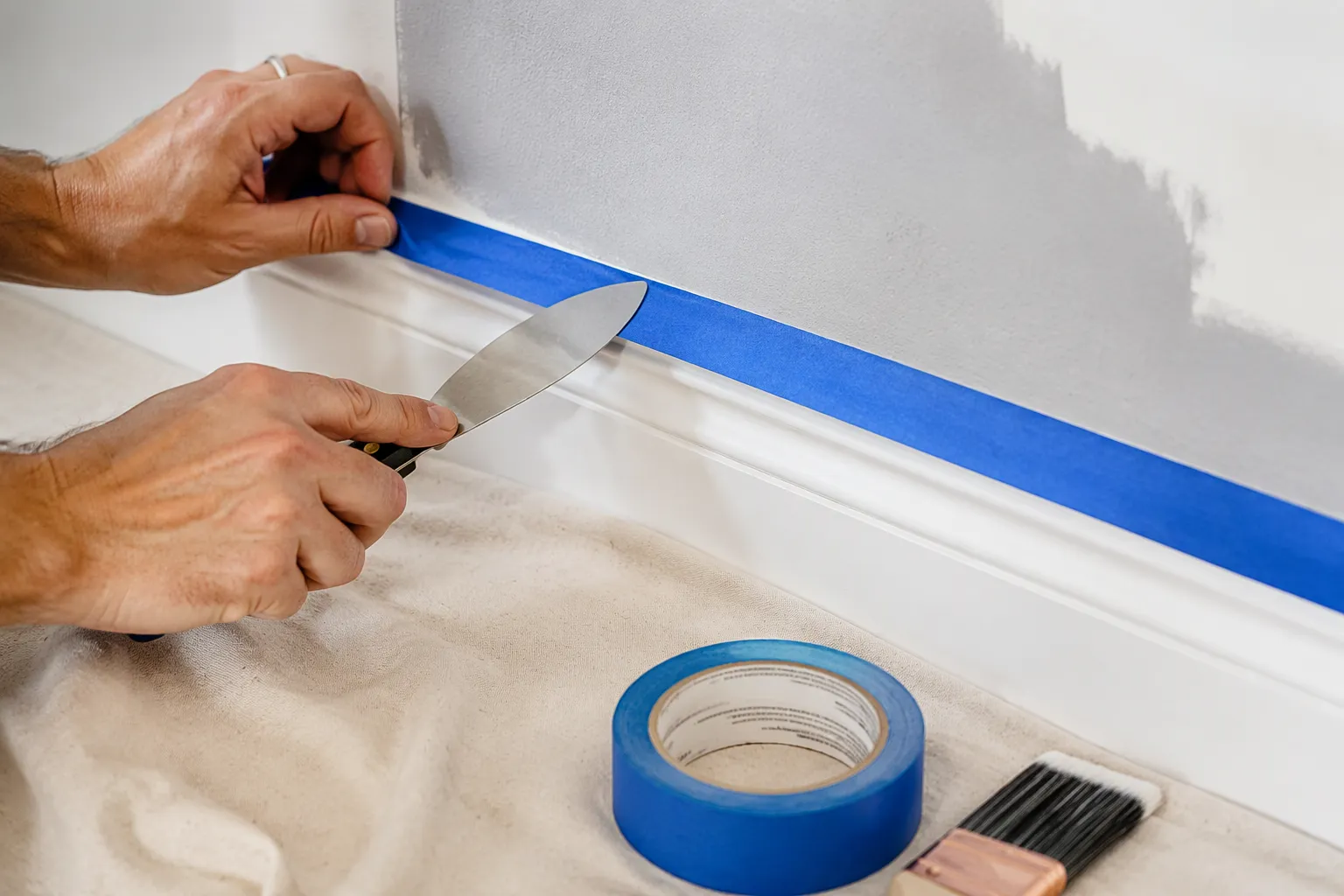
Choosing Tape for Painting: Solving Common Problems
Preventing Paint Bleed
Paint bleed under the tape edge ruins an otherwise clean finish. A tape with good edge hold resists this failure, but technique matters as much as product choice. Press down firmly along every edge after application to create a tight seal. A putty knife or credit card burnishes the tape into textured surfaces, closing the microscopic gaps where paint seeps.
A sacrificial coat of the base color seals the edge before the topcoat. Apply a thin coat of the base color over the tape edge, let it dry, then paint the new color on top. Any seepage happens in the base color, and that barrier stops the following coat from creeping underneath. Spray from the taped edge rather than toward it, and use thin, light coats so air pressure cannot lift the tape.
Removal timing and angle complete the process. Wait until the paint is dry to the touch, then score along the tape edge with a putty knife before pulling. Remove the tape at a 45-degree angle, pulling back on itself. If adhesive sticks, try a 90-degree angle instead. Removing while the paint is tacky but not fully dry produces the cleanest lines, though wet paint on the tape can transfer to other surfaces if you are careless.
Avoiding Residue and Surface Damage
Residue appears when masking tape exceeds its rated removal window. Tape left on vinyl over a weekend in summer heat can bond to the surface, peel off in tiny pieces, and leave adhesive behind. Choosing the right masking tape for the job prevents that scenario. Standard crepe paper tape handles up to about 80°C, while polyester and polyimide grades resist far higher temperatures.
Surface preparation determines removal success. Clean dust, grease, and moisture from the surface before applying tape. Solvent cleaners can react with the adhesive and increase residue risk. Peel slowly and evenly at a 45-degree angle. In cold environments, warm the tape slightly to improve flexibility. For delicate surfaces, a low-tack masking tape protects fresh paint from damage during removal.
The right masking tape for each job balances adhesion strength against dwell time. Short-term masking under 24 hours carries minimal residue risk. Longer projects need tapes labeled for extended clean removal. Testing a small strip before bulk application shows how the tape behaves on your specific surface. That single step reduces rework and protects the surface beneath.
Matching Masking Tape to Your Project
Interior, Delicate, and General Use
Interior work rewards a tape matched to smooth, finished surfaces. Blue painter's tape suits interior walls, trim, ceilings, and other smooth surfaces, holding with medium tack and removing cleanly for up to 14 days. The same grade does not adhere well to rough surfaces such as brick, concrete, or stucco. A multi-surface painter's tape covers mixed rooms where walls, trim, and flooring all need protection in one pass.
Gelly normal temperature masking tape fits this interior category. A crepe paper carrier paired with a rubber-based adhesive tears cleanly by hand and removes without residue from walls, furniture, and glass. Color options include white, light yellow, yellow, red, blue, green, and black. Custom width masking tape runs from 12 mm to 36 mm, and full-color printing supports branding or labeling. For delicate finishes, a low-tack grade remains the safer pick, since strong adhesion can lift fresh coatings.
The table below sets out the masking tape lines Gelly runs by backing, temperature rating, standard widths, clean removal window, and typical application.
Product line | Backing and adhesive | Temperature rating | Standard widths | Clean removal | Typical use |
|---|---|---|---|---|---|
Normal temperature, beige and white | Crepe paper with natural rubber | 60–80°C (140–176°F) | 12–48 mm | 24–72 hours | Interior walls, trim, furniture, light packaging |
Low-tack delicate surface | Crepe paper with low-tack rubber | 60–70°C (140–158°F) | 50 mm standard, custom on request | Repositionable, short dwell | Fresh paint, wallpaper, fragile finishes |
High temperature, crepe | Crepe paper with silicone adhesive | Up to 150°C (302°F) | 3–500 mm | After bake cycle | Automotive refinish, shoe sole bonding, metal drilling |
High temperature, PET | PET film with silicone adhesive | Up to 200°C (392°F) | 3–500 mm | After bake cycle | Powder coating, PCB masking, wave soldering |
High temperature, polyimide | Polyimide film with silicone adhesive | Up to 260°C (500°F) | 3–500 mm | After cure cycle | Aerospace, high-heat curing, electronics protection |
High-Temperature and Specialty Use
Heat-intensive processes demand a different construction. Automotive masking tape is built for vehicle painting and refinishing, where standard tape can lift, wrinkle, or leave adhesive behind during curing. Automotive grades resist 250°F to 300°F (121°C to 149°C) and stay flexible enough to follow curves and trim.
Powder coating pushes ratings higher. A 400°F (204°C) tape covers standard cure cycles of 350°F to 400°F (177°C to 204°C) for 15 to 20 minutes without bubbling or residue. Glass cloth and polyimide tapes reach 500°F (260°C), and polyester grades hold at 400°F (204°C). Gelly high temperature masking tape follows the same ladder: crepe paper to 150°C (302°F), PET film to 200°C (392°F), and polyimide to 260°C (500°F), in widths from 3 mm to 500 mm. Neither grade outranks the other; each fits its own job.
Test a small, inconspicuous strip before a full run, whether the roll is masking tape or painter's tape. A thorough test reproduces the whole cycle: apply, coat, bake, cool, remove, then inspect the surface and edge.
Mixed projects rarely share one surface. Renovation work moves across wood, metal, glass, and plastic in a single job, so keep more than one tape on hand. Compare the label ratings and pick the tape that matches each stage. That habit protects every paint project and keeps the lines crisp.
 Beige Crepe Paper Masking TapeNormal temperature grade, 60–80°C, 12–48 mm custom widths, OEM printing available.View Product
 Low-Tack Masking Tape for Walls2.0–4.0 N/25 mm peel adhesion, 60–70°C, safe removal on fresh paint and wallpaper.View Product
Working to a spec sheet or a private-label program? Send the parameters and we will match a roll to it.
Contact UsConclusion
Choosing masking tape is a five-step decision: surface, paint system, dwell time, width and thickness, then temperature rating. A low-tack masking tape protects delicate finishes, standard crepe paper tape covers walls and general masking, and high-temperature grades in crepe, PET, or polyimide carry the tape through bake and cure cycles. Backing, width, and clean-removal window decide whether the edge stays sharp and the surface stays intact. Test a strip, read the label, and keep two grades on hand for mixed jobs.
If you are sourcing masking tape for distribution, private label, or a specific bake cycle, Gelly manufactures normal-temperature and high-temperature lines with custom widths, colors, and printing, and can quote against your application data.
FAQ
How long can masking tape stay on a surface?
Removal windows vary by grade. General purpose tape typically removes cleanly within 24 to 72 hours. Extended-window painter's tape lines hold up to 14 days. Check the label rating before application, because tape left beyond its rated window can bond to the surface and leave adhesive behind.
Which width should I buy for trim work versus detail work?
Width follows the geometry of the job. Wider rolls cover broad trim and long straight runs efficiently. Narrower rolls from 12 mm to 36 mm handle curves, corners, and hardware edges, and high-temperature lines run from 3 mm to 500 mm. Gelly offers custom widths across these ranges, so keeping two widths on hand covers most mixed projects.
Can standard masking tape handle automotive painting?
Standard grades suit ambient interior work only. Automotive painting and powder coating reach temperatures that soften ordinary adhesives. High-temperature grades resist up to 260°C (500°F) depending on backing: crepe paper to 150°C (302°F), PET film to 200°C (392°F), and polyimide to 260°C (500°F). Each removes cleanly after the bake or cure cycle.
What causes paint to bleed under the tape edge?
Bleed comes from gaps along the tape edge. Press the edge down firmly with a putty knife or credit card. A flat carrier such as washi paper seals tighter than crepe on smooth surfaces, and a thin sacrificial coat of the base color closes what pressure alone cannot. Remove the tape at a 45-degree angle while the paint is still slightly soft.
Does tape color indicate performance?
Color alone does not set performance. Blue often signals medium-tack painter's tape, yet formulations differ between suppliers. Read the adhesion and removal ratings on the label instead. Gelly normal temperature tape comes in white, light yellow, yellow, red, blue, green, and black, with performance set by construction rather than hue.
Do you supply jumbo rolls, custom slit widths, and printed tape?
Yes. Normal temperature lines ship as jumbo rolls of 1270 mm, 1250 mm, or 1020 mm by 1800 m for converters, and as slit rolls cut to 12–48 mm. High-temperature lines cover 3 mm to 500 mm. Full-color logo printing and private-label packaging are available, and the sales team confirms minimum quantities and lead time against each specification.
Sources


Recent News
1.Masking Tape vs Painter's Tape vs Duct Tape Which One Wins
2026-11-062.How to choose the right masking tape for car paint in 2026
2026-01-263.Masking Tape: The Ultimate Guide for Automotive, Art, and DIY Projects
2025-11-124.Automotive masking tape vs regular masking tape: what is the difference?
2025-12-16