


What Is Solvent BOPP Tape in Packaging?
 Nov 16, 2026|
 View:6
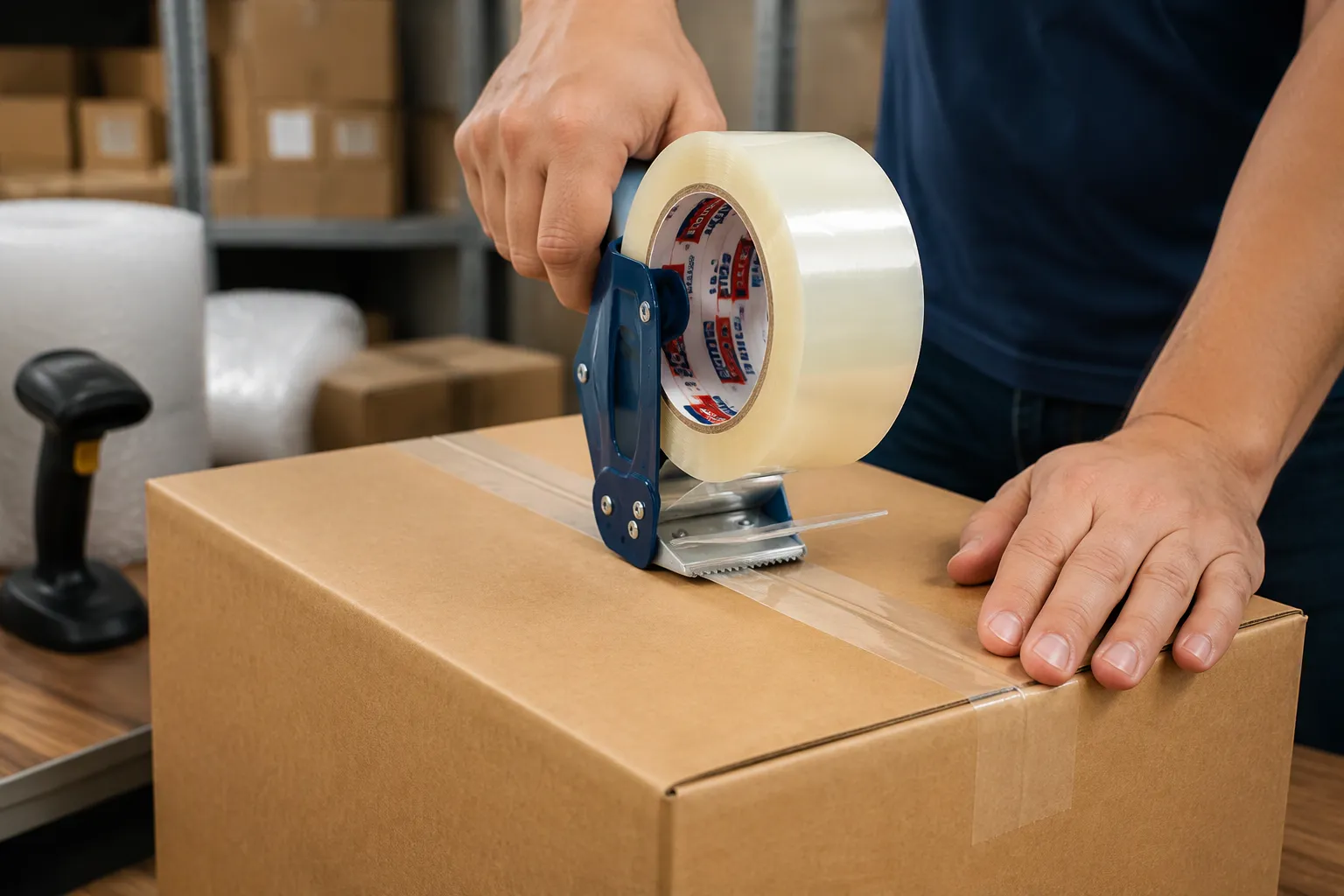
A pallet that leaves a 0°C cold room and reaches a loading dock at 35°C puts one seal through two opposing stresses in a single shift. Recycled corrugated board adds a third: a dusty, fibrous surface that gives a weak adhesive very little to grip. Solvent BOPP tape is the construction buyers reach for in that situation, because it pairs a biaxially oriented polypropylene film with an adhesive that is coated from a solvent carrier and dried before the roll is slit.
This article covers how solvent BOPP tape is built, what the published numbers mean when you actually test a roll, how it differs from hot-melt and water-based BOPP tape on the same carton, and what to require in writing from a supplier. Specifications quoted here follow the published product data for this grade: 55 micron total thickness, tensile strength of at least 50 N/25mm, and a rated range of -10°C to +60°C. Where a figure is a supplier rating rather than an independent test result, that is stated.
Key Takeaways
Solvent BOPP tape is a BOPP film carrying a pressure-sensitive adhesive that was dissolved in organic solvent, coated, and dried. The solvent leaves the line; the adhesive film stays on the roll.
Published figures for this grade are 55 micron total thickness, tensile strength of at least 50 N/25mm, and a rated temperature range of -10°C to +60°C.
It earns its place on heavy cartons, on recycled cardboard with loose fiber, and wherever one seal has to survive both cold storage and a hot dock.
The three BOPP families share a similar film. They differ in how the adhesive is delivered and dried, which is what separates their tack, shear, and cold-weather behavior.
Buy on test results, not adjectives: coat weight, peel and shear data with the method named, a written certificate list, and a written statement of the degradation mechanism if you specify the degradable variant.
What Solvent BOPP Tape Is
Two Layers, Two Jobs
Solvent BOPP tape is built from two engineered layers, and each has a separate job to do. The film backing carries load. The adhesive layer transfers that load to the carton surface. A failure in either layer ends the seal, which is why both are specified in the same conversation rather than one after the other.
The BOPP Film Backing
BOPP stands for biaxially oriented polypropylene, and in solvent BOPP tape it is the layer that carries load. Polypropylene resin is extruded into a continuous sheet, then stretched in two directions: along the machine direction by a roller train, and across the web by a tenter frame. Stretching aligns the polymer chains, and the aligned chains are what give the film its tensile strength and its resistance to tearing. In service, that means the backing stays intact under the tension of a dispenser and resists splitting once the carton is sealed and moving through a supply chain.
The Solvent Adhesive Layer
The adhesive layer in solvent BOPP tape begins as a solution. A polymer is dissolved in an organic solvent, coated onto the film, and then dried so the solvent evaporates and leaves a thin, uniform adhesive film behind. Solvent acrylic is the most widely used chemistry in this category, and solvent rubber systems exist for bonding jobs where a different balance of grab and cohesion is needed. Either way the finished layer is a pressure-sensitive adhesive: it bonds on contact with light application pressure and needs neither heat nor water to activate.
How the Three Families Differ
Solvent, hot-melt, and water-based products share much the same film, so what separates solvent BOPP tape from the other two is the carrier. A hot-melt adhesive is applied as a melt and sets as it cools. A water-based adhesive is carried in water and depends on evaporation and drying. A solvent adhesive uses an organic carrier instead, and the polymer is already in solution before it reaches the coating head. That single difference in delivery shapes tack, holding power, and behavior across temperature, and it is the reason the same carton can behave differently under three tapes that look identical on the roll.
Product Forms
Solvent BOPP tape ships in several forms that share one core construction and differ mainly in appearance and unwind behavior. Clear film suits general carton sealing. Crystal super clear film raises transparency for retail and brand presentation. Colored film supports coding and visual identification on the line. Low-noise unwind rolls cut sound during high-speed dispensing, and residue-free removal matters when the tape has to come off a printed or coated surface without lifting ink.
How Solvent BOPP Tape Is Made
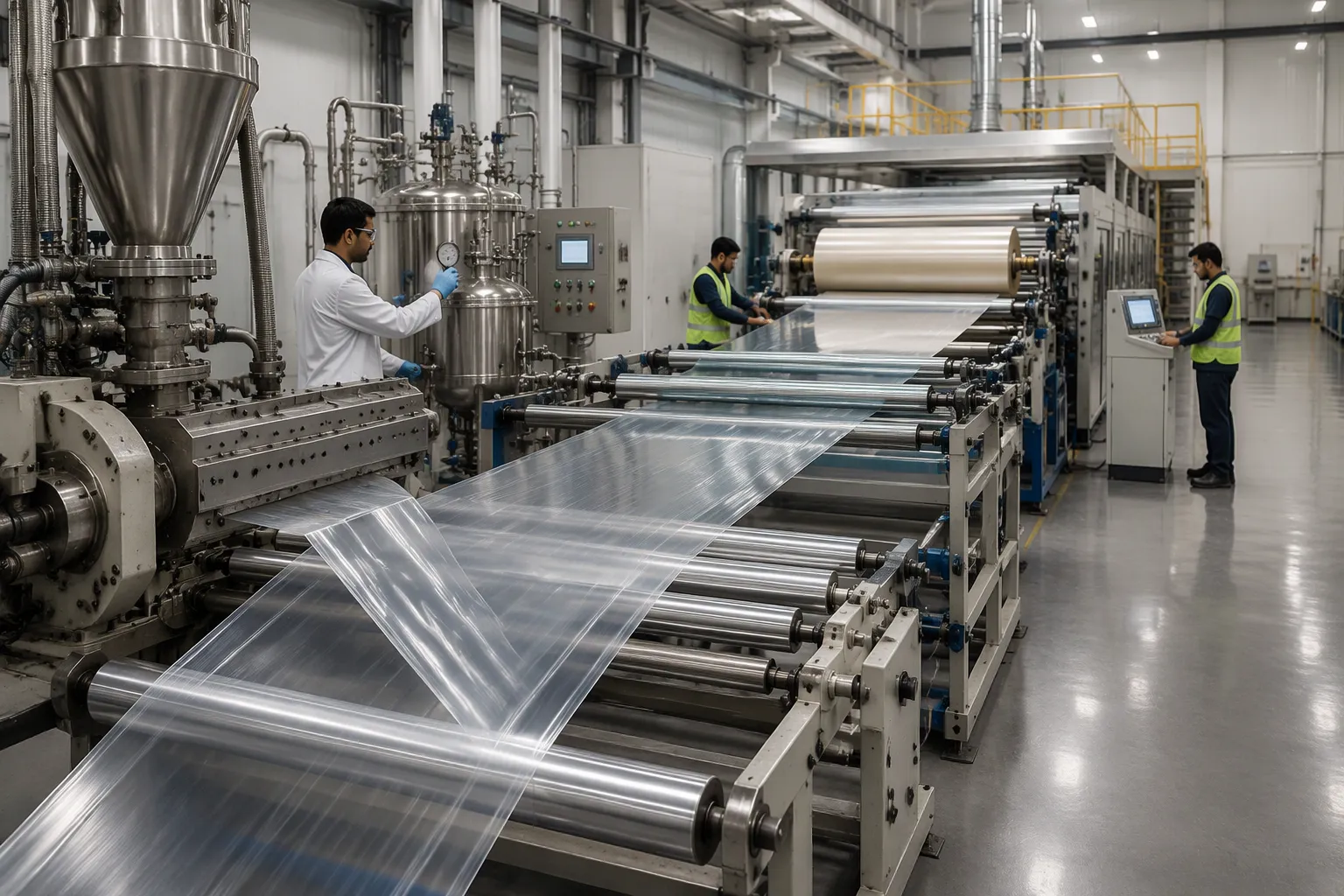
Solvent BOPP tape production runs in three sequential steps. Each one builds on the step before it, and a defect introduced early is not recoverable later in the line. Film quality decides how the tape behaves under tension, adhesive formulation decides how it grips, and coating and drying decide whether the adhesive you paid for is still on the roll after six months in a warehouse.
Film production turns polypropylene resin into a stretched backing with a treated surface.
Adhesive formulation prepares the solvent-borne bonding layer and sets its solids content.
Coating, drying, and finishing join the two, drive off the solvent, and convert the jumbo roll into saleable widths.
Step 1: Film Production
Extrusion and Biaxial Stretching
Extruders melt polypropylene resin and push it through a die to form a continuous sheet. The sheet enters a stretching line, where rollers pull it in the machine direction and a tenter frame grips the edges and stretches it across the web. Pulling in two directions is what balances strength: a film stretched one way tears readily across the other. The line ends with a wound master roll that is inspected for thickness variation before it moves on, because a thickness profile that wanders across the web will coat unevenly no matter how well the adhesive is formulated.
Corona Treatment
Plain polypropylene has low surface energy, and a low-energy surface is a poor anchor for the adhesive in solvent BOPP tape. Corona treatment passes the film through an electrical discharge that alters the surface chemistry and raises its energy, creating anchor points for the coating. This step is easy to under-specify and expensive to get wrong. A well-treated surface keeps the film-to-adhesive bond intact through humidity swings and temperature cycling; an under-treated one shows up later as adhesive transfer onto the carton and a clean film left on the roll.
Step 2: Adhesive Formulation
The adhesive formulation for solvent BOPP tape blends base polymers for cohesion, tackifiers to raise initial grab, and organic solvents to dissolve the solids and carry them to the coating head. The solvent blend is not a detail: it sets drying speed, coating quality, and the viscosity of the mix. Viscosity control is the closest thing this stage has to a quality gate. A mix that runs too thick coats unevenly and leaves high and low spots across the web; a mix that runs too thin fails to build the coat weight the specification calls for. Operators monitor viscosity and adjust with solvent additions, and the solution then feeds the coating line at a steady rate so that coat weight stays inside its window from the start of a run to the end.
Step 3: Coating, Drying, and Finishing
Coating Methods and Solvent Recovery
Coating technique for solvent BOPP tape varies with line design; reverse roll and gravure are the two common approaches. Each deposits a controlled wet film on the treated surface, and the wet film thickness is what ultimately decides the dry coat weight. The solvent then leaves the web in the drying oven. Modern lines capture those vapors through solvent recovery systems rather than venting them, which reduces volatile organic compound emissions and returns solvent for reuse. On a solvent line this is a cost control measure and an environmental compliance measure at the same time, and buyers auditing a factory are usually entitled to ask how recovery is handled.
Drying and Curing
Heat drives the solvent off the web in solvent BOPP tape, but the schedule matters as much as the temperature. Drying that is too fast can skin over the surface and trap residual solvent underneath, which weakens the bond and can leave an odor in the finished roll. Gradual, even drying leaves a smooth adhesive layer with consistent properties across the width. Some lines add a curing stage after drying to let the adhesive develop its final peel and shear values before the roll is converted.
Slitting and Winding
Slitting cuts the solvent BOPP tape jumbo roll into saleable widths, and winding builds tight, even rolls that unwind without shock on a dispenser. Both steps are where a good coating can still be ruined by poor tension control. Jumbo roll supply is available for converters who slit and print in-house, and the 55 micron solvent-based build is the standard conversion grade in this product line.
Standard Specifications
The figures below are the published values for this grade. They are the numbers to put in a request for quotation, and the numbers to check a delivered roll against.
Specification | Published value |
|---|---|
Total thickness | 55 micron, film plus dried adhesive |
Backing and adhesive | BOPP film with solvent acrylic adhesive |
Tensile strength | At least 50 N/25mm |
Temperature resistance | -10°C to +60°C |
Standard widths | 45mm, 48mm, 50mm, 60mm, 72mm |
Custom widths | 12mm to 1280mm |
Standard lengths | 50m, 66m, 100m, 100y (about 91m) |
Custom lengths | Up to 4000m |
Degradable variant | Available, same process with an adjusted film formulation |
Reading Solvent BOPP Tape Performance Numbers
Initial Tack and Peel Adhesion
Initial tack describes how quickly the adhesive on solvent BOPP tape grabs a surface on contact, and it is the property that decides whether a packer can seal a carton with one pass of a dispenser and no dwell time. A solvent acrylic adhesive delivers high initial grab, which is why this construction suits manual lines where the operator moves straight from sealing to stacking. Peel adhesion measures the force required to lift the tape back off a surface. High peel values keep the seal closed when cartons shift, stack, or vibrate in a trailer. Peel results are only comparable when the method is named, since test speed, dwell time, and substrate all move the number; the industry test procedures published by the pressure-sensitive tape standards body are the usual reference point for both peel and shear.
Shear Strength and Holding Power
Shear strength in solvent BOPP tape resists sliding forces parallel to the bond line, and holding power describes how long a bond survives a steady load. These two, not tack, are what fail first on a stacked pallet: the seal does not lift, it creeps sideways under the weight until the flap opens. A solvent adhesive builds high internal cohesion, so sealed flaps stay closed under stacked weight and in long-term storage where a failed seal means lost goods, rework, and a claim. When a supplier quotes holding power without units or test conditions, treat the figure as marketing rather than engineering.
Temperature, Humidity, and Light
Solvent BOPP tape in this product line carries a rated resistance range of -10°C to +60°C, which covers cold storage rooms, unheated warehouses, and summer loading docks, and it is the band to check first if your route includes any of those. On humidity, a solvent-coated film resists moisture pickup better than a paper-backed tape would, so a sealed case that catches damp in a container is less likely to see the backing soften. On light, the honest answer is narrower than most product pages suggest: acrylic adhesives age under prolonged direct ultraviolet exposure, and a packaging tape is not a UV-stabilized outdoor product. Staging under a canopy or indoors is fine. Months of direct sun on a pallet is not a use case to design around, whatever the temperature rating says.
Solvent vs. Hot-Melt vs. Water-Based
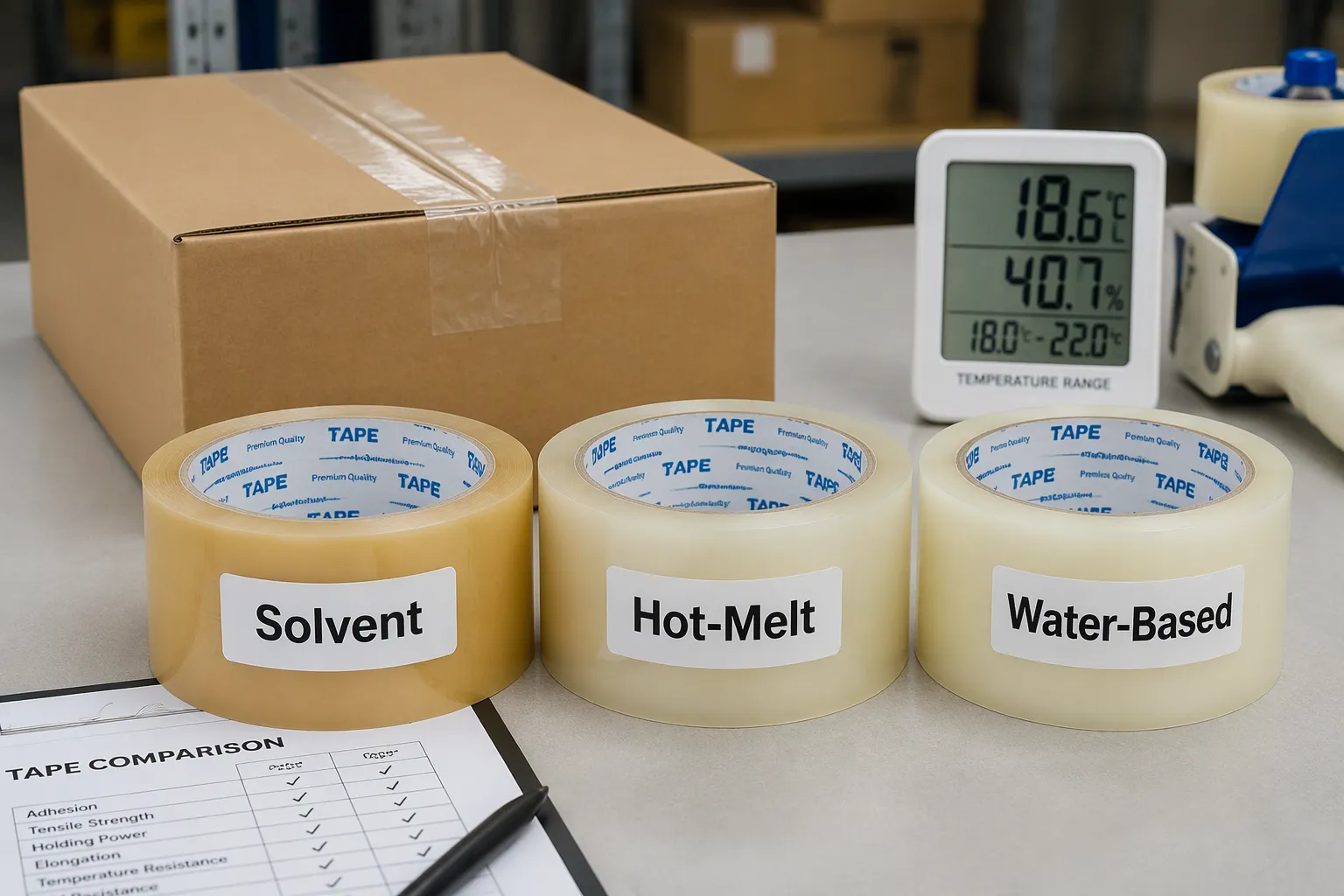
The three families are usually compared with adjectives. That comparison is not much use when you have a carton in front of you, so the sections below separate what is structural about each chemistry from what depends on the specific product you buy.
Where the Difference Comes From
The adhesive system, not the film, drives how solvent BOPP tape performs on tack, holding power, and temperature. Solvent-based systems dissolve the polymer and deposit a thin, uniform film once the carrier is gone, and that film is what delivers strong initial grab together with high shear strength. Hot-melt adhesives are applied molten and set as they cool, which favors fast grab on standard corrugated and high line speeds. Water-based adhesives dry from an aqueous carrier and give dependable everyday performance with simpler handling. Each chemistry reaches its own balance, and none of the three is universally superior; the useful question is which failure mode you can least afford.
A Side-by-Side Comparison
Property | Solvent | Hot-melt | Water-based |
|---|---|---|---|
How the adhesive lands on the film | Polymer in organic solvent, dried off | Applied molten, sets on cooling | Polymer in water, dried off |
Initial tack | High | High on standard corrugated | Moderate |
Shear strength | High | Moderate | Moderate |
Rated temperature range | -10°C to +60°C for this grade | Confirm the rated band per product | Confirm the rated band per product |
Typical fit | Heavy cartons, recycled board, mixed surfaces | High-speed lines on standard corrugated | General case sealing, cleaner handling |
Two cells in that table deliberately refuse to give a number. Hot-melt and water-based temperature bands vary widely between products, and quoting one range for the whole family would be a guess dressed as a specification. Ask each supplier for the rated band on the grade you are buying.
Surface, Environment, and Line Speed
Surface type shapes the choice more than any other variable. Solvent BOPP tape bonds firmly to cardboard, plastic, and metal, including recycled board with dusty fiber that defeats a weaker adhesive. Hot-melt suits high-speed lines that need instant grab on standard corrugated. Water-based tape fits general case sealing where clean handling and straightforward documentation matter. Where a route includes humidity and outdoor staging, the solvent construction has the edge, provided the staging is not months of direct sun.
Line speed deserves its own line, because it is where a technically suitable tape fails commercially. Hot-melt performs on fast automated equipment. Solvent BOPP tape runs on manual dispensers and automated systems alike, and consistent unwind plus strong tack is what keeps a line from stopping every few hundred cases; noise on a high-speed line is a separate cost, which is why standard and low-noise tape are often compared on total cost rather than on roll price. Water-based tape works well on moderate-speed lines. Match the format to the equipment, not the other way around.
Documentation and Compliance
Solvent-borne adhesives can carry different transport and regulatory documentation than hot-melt or water-based products, because an organic solvent raises classification questions in some markets. If you ship across borders, confirm the documents before the first order rather than at the port.
The degradable variant of solvent BOPP tape needs its own paragraph, because this is where packaging claims most often outrun the paperwork. A tape sold as degradable can mean several different things, and one of them is restricted in Europe: the rules that prohibit oxo-degradable plastics bar such products from the EU market because they fragment into microplastics rather than biodegrade, interfere with plastic recycling, and are not compostable. That restriction sits inside the wider single-use plastics framework in the European Union. If you are buying a degradable tape for a European customer, get the mechanism in writing, ask whether additives drive oxidation, and match the answer against the market you are shipping into. The chemistry that satisfies one market's claim can fail another market's law.
Cost per Roll vs. Cost per Sealed Case
The roll price of solvent BOPP tape on its own misleads, and so does the claim that one chemistry is cheaper than another. What you actually pay is meters consumed per case, priced at your landed cost per meter, plus the cost of failures weighted by their frequency. Build the second half honestly: re-tape labor, goods lost, reshipment, and the customer conversation that follows a case arriving open. A tape that costs fifteen percent more per roll and cuts seal failures from two per thousand cases to half that will usually win once labor enters the arithmetic. Run it on your own numbers rather than on a supplier's example, because the answer flips depending on how much of your volume is heavy, cold, or on recovered board.
Need the coat weight, peel, and shear figures for a specific build before you specify?
Get a Quote
Solvent BOPP Tape 55mic
Standard conversion grade, 55 micron, solvent acrylic adhesive.
View Product
Crystal Super Clear
Solvent BOPP tape with high transparency for retail-facing cartons.
View Product
Degradable BOPP Tape
Degradable film with solvent adhesive; confirm the mechanism in writing.
View ProductMatching Solvent BOPP Tape to the Job
Carton Weight, Surface, and Environment
Start with the carton. Weigh a filled case and note how high it will be stacked, because stacked weight is what turns into shear load on the seal. Heavy loads demand the high shear strength that solvent BOPP tape is chosen for. Then check the surface. Recycled cardboard carries dust and loose fiber, and high initial tack is what grabs those surfaces where a weaker product slips before it ever gets a chance to build adhesion.
Map the environment next. Cold storage, hot loading docks, and humid warehouses each stress a seal differently, and the -10°C to +60°C range rated for solvent BOPP tape covers most shipping and storage conditions without special measures. Add any outdoor staging or UV exposure to the picture, and write the conditions down before you start comparing rolls. A specification written from real conditions is short, and it ends arguments later.
Where It Fits Less Well
Lightweight cartons sealed for a short trip inside a dry building do not need this level of performance. Hot-melt and water-based BOPP tape often serve those jobs with a lower entry cost, and specifying solvent BOPP tape for them is paying for shear strength the application never uses. That is not a defect in either product; it is a reminder that the format should follow the failure mode you actually have.
What to Ask a Supplier
Supplier selection for solvent BOPP tape tends to collapse into price comparison, which is how buyers end up with rolls that pass on arrival and fail in month four. The supplier landscape in China is wide enough that the same nominal specification covers a lot of different real products, so the checklist below is less about vetting a company than about pinning down which product you are being quoted.
An Inquiry Checklist
Ask for | Why it changes the price you pay | What a good answer looks like |
|---|---|---|
Adhesive chemistry | Sets tack, shear, and cold behavior | Named chemistry, not the word strong |
Total thickness and coat weight | Coat weight is where cost and tack both live | Grammes per square meter, plus a tolerance |
180° peel and shear results | Predicts whether the seal survives the route | A value with the test method and substrate named |
Certificate list | Decides whether the goods clear your market | Named documents with validity dates |
Degradation mechanism | A compliance risk if it is the oxidation type | Written description, not a marketing phrase |
Minimum order, lead time, core diameter | Drives your inventory and dispenser fit | Numbers in the quotation, not in a later email |
Sizes and Custom Builds
Standard widths for solvent BOPP tape run 45mm, 48mm, 50mm, 60mm, and 72mm, which covers most hand dispensers and case sealers in service. Custom widths span 12mm to 1280mm, so a narrow carton closing application and a wide jumbo conversion can come from the same specification. Standard lengths are 50m, 66m, 100m, and 100y, and custom lengths run up to 4000m for operations that would rather change a roll once a shift than four times.
Printing and color are separate decisions from seal performance. Custom printed tape carries brand and handling marks, and colored film does the same job with less artwork cost. Ask about plate or cylinder costs and minimum quantities before assuming printing is a per-roll add-on, because on short runs the setup often outweighs the film.
Storage and Handling
Temperature, Humidity, and Shelf Life
Store solvent BOPP tape in a moderate, dry place, off concrete floors and out of direct sunlight. Heat softens adhesive and accelerates the migration that turns a clean unwind into a noisy one; humidity attacks the cardboard core long before it reaches the adhesive. Rotate stock so older rolls ship first, and write the receipt date on each carton rather than trusting a memory of when the pallet arrived.
Handle rolls with care in both directions. A dropped roll deforms the edge, and a deformed edge causes unwind problems on the line that get blamed on the adhesive. Respect the stated shelf life, and test older stock on a real carton before committing it to a full production run, since a roll that has aged quietly in a warm warehouse can look sound and still underperform.
Sending a carton sample is faster than comparing data sheets. Tell us the weight, surface, and storage conditions.
Contact UsSolvent BOPP tape is a BOPP film carrying a pressure-sensitive adhesive that was coated from an organic solvent and dried. Production runs through three steps: film production with corona treatment, solvent adhesive formulation, and coating, drying, and finishing. High initial tack, high shear strength, and a rated range of -10°C to +60°C make it a fit for demanding carton sealing, long-distance shipping, and storage that crosses a temperature band. Hot-melt and water-based tape may fit lighter, shorter, drier jobs at a lower entry cost, and the comparison is worth making on cost per sealed case rather than on roll price.
Choose by matching the seal to the conditions it will meet, then confirm the documents before the first container. For buyers sourcing solvent BOPP tape in volume, Gelly supplies this construction in 55 micron and custom builds, with widths from 12mm to 1280mm, custom lengths to 4000m, and printed or colored film where branding is required. Send the carton, the weight, and the storage conditions, and the specification conversation starts from the application instead of from a price list.
FAQ
What thickness, widths, and lengths does solvent BOPP tape come in?
The standard construction is 55 microns total thickness, which covers the film backing plus the dried adhesive layer. Thickness alone does not tell you how a roll will perform, since the same total can be built from a thicker film and a lighter coat, or the reverse. Standard widths run 45mm, 48mm, 50mm, 60mm, and 72mm, with custom widths from 12mm to 1280mm. Standard lengths include 50m, 66m, 100m, and 100y, the last being about 91m, and custom lengths run up to 4000m.
How strong is the film backing?
The film in solvent BOPP tape has a tensile strength of at least 50 N/25mm. That value keeps the backing intact under dispenser tension and in transit, and it is what stops a carton splitting at the seal when the load shifts or the pallet is handled roughly.
What temperature range does solvent BOPP tape handle?
The rated range is -10°C to +60°C, which covers cold storage rooms, unheated warehouses, and hot loading docks. Conditions outside that band need a different construction rather than a different storage instruction, so confirm the rating before you specify.
Can I print a logo on solvent BOPP tape?
Yes. Custom printing handles logos, handling marks, and warning text, and colored film covers simple identification at lower setup cost. Ask about artwork format, plate charges, and minimum order quantity together, because the minimum is usually set by the printing step rather than by the tape.
Is a degradable version of solvent BOPP tape available?
Yes, a degradable BOPP variant with solvent adhesive is offered, and it is produced on the same line with an adjusted film formulation. Before specifying it, ask the supplier to describe the degradation mechanism in writing, and check that description against the rules of the market you ship to; oxidation-driven additives are restricted in the European Union, so the claim that travels well is not always the one that sells.
Does solvent BOPP tape work on recycled cartons?
Yes. High initial tack grabs dusty, fibrous recycled board where a weaker adhesive slips before adhesion develops, which makes solvent BOPP tape a practical choice for operations sealing recovered corrugated. Check the board grade with a sample rather than assuming, since recycled content and surface treatment vary by mill.


