


Automotive masking tape vs regular masking tape: what is the difference?
 Dec 16, 2025|
 View:343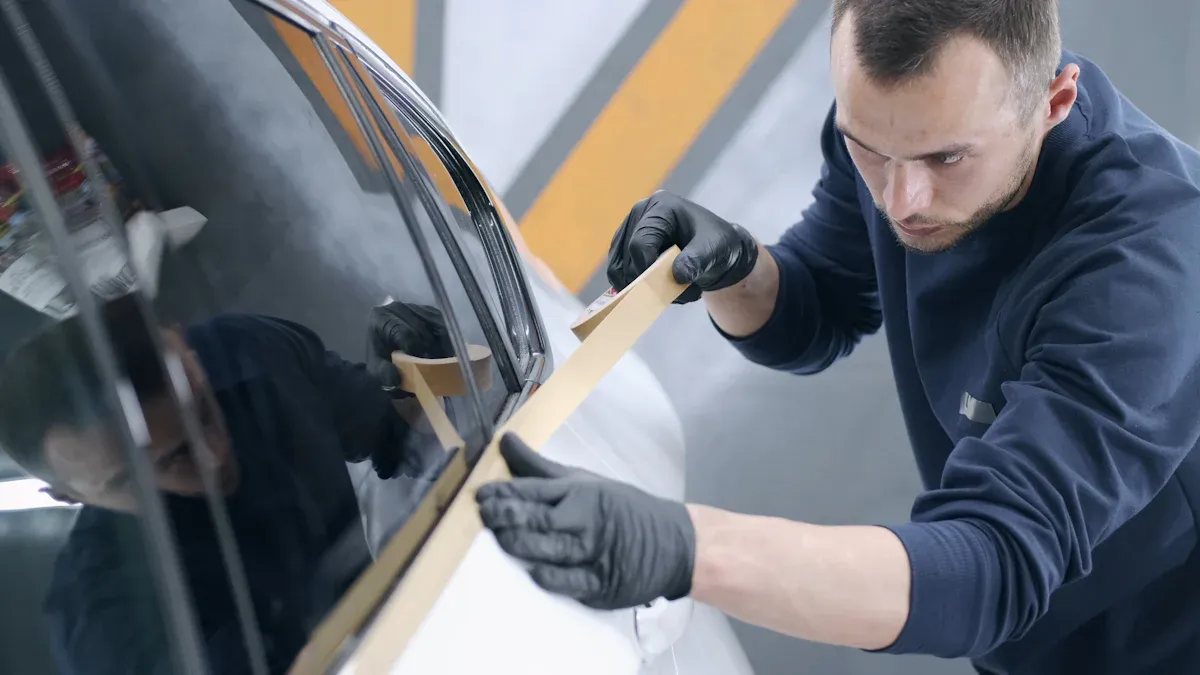
You should know that automotive masking tape and regular masking tape are not the same. Automotive masking tape can handle high heat. It comes off cleanly. It makes sharp paint lines. It bends easily around curves. Regular masking tape does not work well for painting cars. Body shops use automotive masking tape because it lowers paint mistakes by 40%. It also cuts fixing time by up to 30%. Picking the right tape helps you save time and get better results. Automotive masking tape vs regular masking tape: what is the difference? Knowing this can help you save work and money.
Key Takeaways
Automotive masking tape works well with high heat. It comes off cleanly. This makes it great for painting cars.
Regular masking tape is good for easy jobs. You can use it for crafts or labeling. It does not work well with heat.
Automotive masking tape helps stop paint mistakes by 40%. It also makes fixing errors 30% faster.
Pick the tape that fits your project. Use automotive tape for cars. Use regular tape for things at home.
Take off tape soon after you paint. This stops sticky messes. It also helps make paint lines sharp.
What is Automotive Masking Tape?
Definition and Main Uses
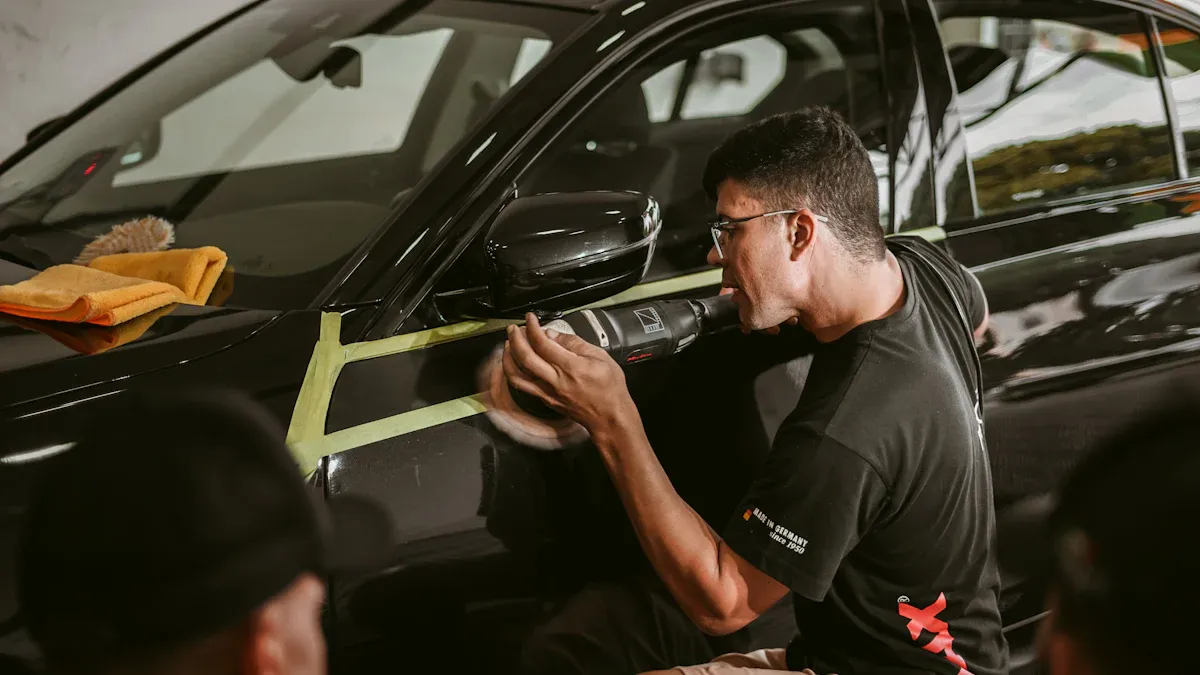
Automotive masking tape is used for hard jobs in car painting. It works well when cars need repairs. This tape can handle high heat. People use it in auto body shops and car factories. You can also use it for custom paint jobs at home. It protects surfaces during welding and sanding. It helps keep areas safe from rust removal. You can use it to cover spots for sealants or adhesives. It works for sound-damping materials too. Many people bundle wires and hoses with this tape. If you want sharp paint lines, this tape is a good pick. It is great for custom paint or wraps.
Automotive masking tape makes car work easier. It helps you finish faster and make fewer mistakes. You waste less and get better results. This tape helps with new ways to fix and change cars.
Key Features
Automotive masking tape has special features that make it different:
It can handle high heat up to 90°C for a long time. It can take even more heat for short times.
You can pull it off easily. It does not leave sticky stuff behind.
It keeps paint from leaking through. Your paint lines stay sharp.
The tape bends around corners and curves. It does not rip.
It sticks well to metal, aluminum, and plastic.
The tape is thin for careful work. It is strong enough to protect surfaces.
Tip: Use automotive masking tape when you need heat resistance and clean lines. Regular tape may not work well for these jobs.
Here is a table that shows what materials are used in automotive masking tape:
Material Type | Description |
|---|---|
Backing | Thin, moist crepe paper, polyester, glass, foil, ceramic, foam |
Adhesive Layer | Solvent-free, hot melt, acrylic-based adhesives |
Manufacturers test automotive masking tape in labs. They check how well it peels and stretches. They test it in heat and with chemicals. This means you can trust it for easy and hard car jobs.
What is Regular Masking Tape?
Definition and Uses
You often see regular masking tape at home or school. People use it for crafts, quick fixes, and labeling things. You can tear it by hand. It sticks to paper, wood, or glass. Some people call it painters tape when painting walls or trim. You might use it to mark spots before painting. It can hold light things or bundle cords. Painters tape keeps paint off windows and baseboards. You can use it for art, school projects, or small repairs.
Regular masking tape is best for easy jobs. You can pull it off without tools. It is cheap, so you can buy a lot for big projects. Painters tape comes in many sizes and colors. You can pick what fits your job.
General Characteristics
Regular masking tape has paper on the back and sticky glue. There are different kinds of glue used. Here is a table that lists the main types and what they do:
Adhesive Type | Characteristics |
|---|---|
Rubber-based | Greatest adhesion, lowest temperature resistance |
Acrylic-based | Wide temperature range, works from freezing up to 275–325 °F (about 150 °C) |
Silicone-based | Highest temperature resistance, some tapes withstand up to 500 °F (260 °C) |
Most regular masking tape uses rubber-based glue. It sticks well but does not like heat. Acrylic-based glue works in hot or cold places. Silicone-based glue is best for high heat, but it is rare.
Note: Regular masking tape can take heat up to 200°F (93°C) for a short time. If it gets hotter, the glue can melt. You might see sticky mess or tape falling off. For hot jobs, use special tape.
You will see some problems if you use regular masking tape on cars. It may not stick to metal or curved spots. It can leave glue behind if it gets hot or stays on too long. Painters tape does not make sharp lines on cars. Paint can leak or look rough. For car work, regular masking tape is not as good as automotive masking tape.
Regular masking tape is good for simple jobs.
It does not work well with heat or hard surfaces.
Use it for crafts, labels, or small painting jobs.
Automotive Masking Tape vs Regular Masking Tape: What is the Difference?
When you ask, "automotive masking tape vs regular masking tape: what is the difference?", you need to look at several key features. Each type of tape has strengths and weaknesses. These differences matter when you want the best results for your paint project or repair.
Heat Resistance
Heat resistance is one of the most important differences. You often need to use tape in hot conditions, especially when working on cars. Automotive masking tape can handle high heat for long periods. Regular masking tape can take some heat, but not as much.
Type of Tape | Maximum Temperature Resistance |
|---|---|
Automotive Masking Tape | 110°C (230°F) |
Regular Masking Tape | 163°C (325°F) |
You might notice that regular masking tape can take a higher peak temperature. However, automotive masking tape keeps its shape and stickiness better during long, hot paint jobs. This means you get fewer problems with peeling or melting. For car painting, you want tape that stays strong in heat.
Tip: Always check the temperature rating before you start a paint job. Using the wrong tape can lead to sticky messes or ruined paint lines.
Adhesive Strength
Adhesive strength decides how well the tape sticks to surfaces. In the debate of automotive masking tape vs regular masking tape: what is the difference?, this feature stands out. You want tape that holds tight but comes off clean.
Automotive masking tape has stronger adhesion than regular masking tape.
This strong grip helps it stick to metal, plastic, and curved car parts.
You get a better seal, so paint does not leak under the tape.
Regular masking tape works well for paper or wood. It may not stick well to car surfaces, especially if they are oily or curved. If you want sharp paint lines, you need tape that stays put.
Clean Removal and Residue
Clean removal is key for any paint job. You do not want sticky glue left behind. Automotive masking tape peels off easily, even after baking in heat. It leaves no residue, so you save time on cleanup.
Regular masking tape can leave glue on surfaces, especially if you leave it on too long or use it in hot places. This can ruin your paint finish and make extra work for you.
Note: For best results, remove tape soon after painting. This helps avoid residue and keeps your paint lines sharp.
Flexibility and Thickness
Flexibility and thickness affect how well the tape fits around curves and edges. Automotive masking tape vs regular masking tape: what is the difference? You will see it in how the tape handles tricky spots.
Characteristic | Regular Masking Tape | Automotive Masking Tape |
|---|---|---|
Total Thickness | 90 µm | 125 µm |
MD Tensile Strength | > 24 N/cm | > 28 N/cm |
MD Elongation at Break | > 6 % | > 8 % |
Adhesion to Steel Plate | > 1.6 N/cm | > 2.2 N/cm |
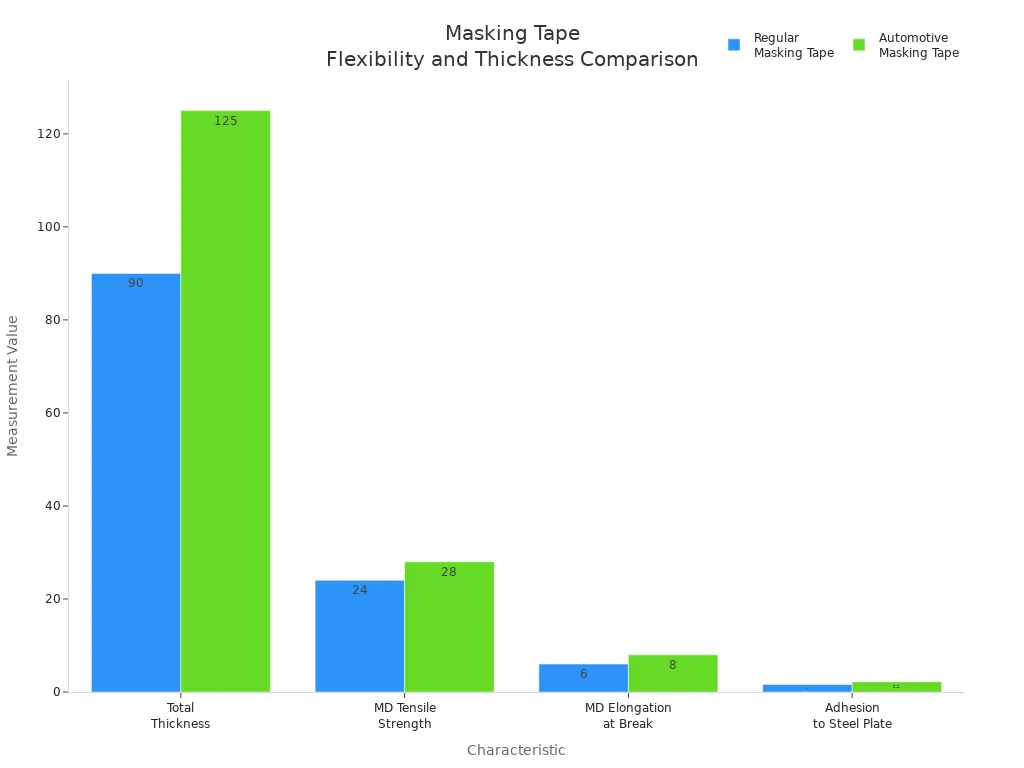
Automotive masking tape is thicker and stronger. It stretches more before breaking. This lets you wrap it around curves and corners without tearing. You get better coverage and fewer gaps for paint to seep through.
Paint Line Quality
Paint line quality is where you see the biggest difference. Automotive masking tape vs regular masking tape: what is the difference? The answer is in the finish.
Automotive masking tape gives you crisp, sharp paint lines. It blocks paint from bleeding under the edge.
Regular masking tape can let paint leak through. You might see fuzzy or uneven lines.
If you want a professional look, use automotive masking tape for car paint jobs. For crafts or simple wall painting, regular masking tape may be enough.
Remember: The right tape makes your paint job look clean and sharp. The wrong tape can ruin hours of work.
Other Factors to Consider
You should also think about cost, shelf life, and the environment.
Automotive masking tape costs more because it uses special materials and adhesives. Regular masking tape is cheaper, but may not work for tough jobs.
Both tapes last 6 months to 2 years if you store them well. Tapes with acrylic or silicone glue last longer than rubber-based ones.
Automotive masking tape often uses plastic materials that do not break down. Eco-friendly tapes made from paper or plants help reduce waste.
When you ask, "automotive masking tape vs regular masking tape: what is the difference?", you need to match the tape to your project. For car painting, repairs, or any job needing sharp paint lines and heat resistance, automotive masking tape is the best choice. For crafts, labels, or simple paint jobs, regular masking tape works fine.
When to Use Automotive Masking Tape
Best Applications
Pick automotive masking tape for hard jobs that need strong results. This tape is best when you deal with heat, sharp lines, or tricky surfaces. Here are some times when you should use it:
Spray painting cars or motorcycles
Touching up car panels or bumpers
Doing detail work that needs clean edges
Working in a professional car shop
Covering spots like glass or trim that must stay paint-free
Regular masking tape is good for walls, furniture, or quick wrapping. It does not work as well for car jobs. Automotive masking tape stops paint from bleeding and keeps lines sharp.
Tip: Use automotive masking tape if your job gets hot or needs a perfect finish.
Examples of Use
You see automotive masking tape used a lot in auto body shops. Workers use it to make sharp, clean lines when they refinish cars. This tape blocks overspray and stops paint from leaking under the edge. Top car makers want this tape so every car looks great.
Here are some real-life examples:
Auto painters use high-temperature tape for crisp lines and no paint bleed.
Shops use this tape to cover glass, lights, and inside parts before painting.
Many pros say they redo 15% fewer jobs because the tape makes cleaner lines.
You can pull the tape off easily without hurting the new paint.
You get the best results when you use automotive masking tape for painting, touch-ups, and detail work. It helps you finish faster and make fewer mistakes.
Substitution Risks
Using Regular Tape for Automotive Tasks
If you use regular masking tape for car jobs, you face many problems. Regular tape cannot handle the heat from car painting. It may peel off during drying. This can ruin your paint job. You might see sticky glue left behind. That glue can damage the paint finish. Regular tape does not block paint well. You may get fuzzy lines or paint leaks.
Automotive experts say you need high-temperature masking tape for car painting. This tape stands up to heat and solvents. It keeps its shape and sticks well. Regular tape does not work in these tough conditions. You risk poor results and more work fixing mistakes.
Here are some common issues when you use regular tape for automotive paint tasks:
Tape comes off during drying cycles.
Sticky residue stays on the surface.
Paint lines look messy or uneven.
Tape does not stick to metal or curved parts.
The finish may get damaged.
Tip: Always use automotive masking tape for car painting. It gives you clean lines and protects your work.
Using Automotive Tape for General Tasks
You might think automotive masking tape works for any job. It does stick well and resists heat. Still, it is not always the best choice for simple tasks at home or school. Some people may get skin irritation from the strong adhesive. If you use it for a long time, tiny particles can get in the air. These may bother people with breathing problems. If the adhesive touches your eyes, it can cause discomfort.
For crafts, labeling, or light painting, regular masking tape is safer and cheaper. Automotive tape costs more and may be too strong for delicate surfaces. You do not need high heat resistance for most home projects.
Common risks when using automotive tape for general tasks:
Skin redness or rash from the adhesive.
Breathing in small particles.
Eye irritation if touched.
Note: Pick the right tape for your job. Using the wrong tape can lead to tape failure, sticky messes, or even health issues. Clean surfaces before you apply any tape. Test a small area first if you are unsure.
There are many ways automotive masking tape and regular masking tape are not alike. Automotive masking tape can take heat, make neat lines, and comes off without mess. Regular masking tape is better for crafts or easy jobs. When you choose tape, think about how hot it gets, what you stick it to, and how you will take it off.
Pick tape that fits your surface and how long you need it.
Use tape that sticks well for rough things, and tape that is gentle for soft things.
Pick special tape if you are painting cars or working with heat.
Mistake Type | Evidence Percentage | Description |
|---|---|---|
Poor adhesion to surfaces | 60% | Tape comes off or gets loose when you use it. |
Incompatibility with paint | 47% | Using the wrong tape makes paint jobs fail or need fixing. |
Auto painters who work on cars say 3M blue tape or Frog tape make sharp lines. If you pick the right tape, you save time and your work looks neat.
FAQ
Can you use regular masking tape for car painting?
Regular masking tape is not good for car painting. It cannot take high heat. Paint can leak under the tape. Sticky glue might stay after you pull it off. Automotive masking tape gives cleaner lines and better results.
What makes automotive masking tape heat resistant?
Special glue and backing make this tape strong in heat. These parts help the tape stay in place when it gets hot. You can use it during baking or drying. It will not melt or peel off.
Does automotive masking tape work on curved surfaces?
Automotive masking tape bends around corners and curves easily. You can put it on car panels, mirrors, or trim. The tape stretches and does not rip. This helps you get sharp paint lines on hard shapes.
How do you remove masking tape without leaving residue?
Pull the tape off slowly at a 45-degree angle. Take it off soon after you finish painting. Automotive masking tape comes off clean. Regular masking tape can leave sticky glue, especially if it gets hot.


