


Types of Double Sided Tape: A Comprehensive Guide
 Oct 19, 2026|
 View:8
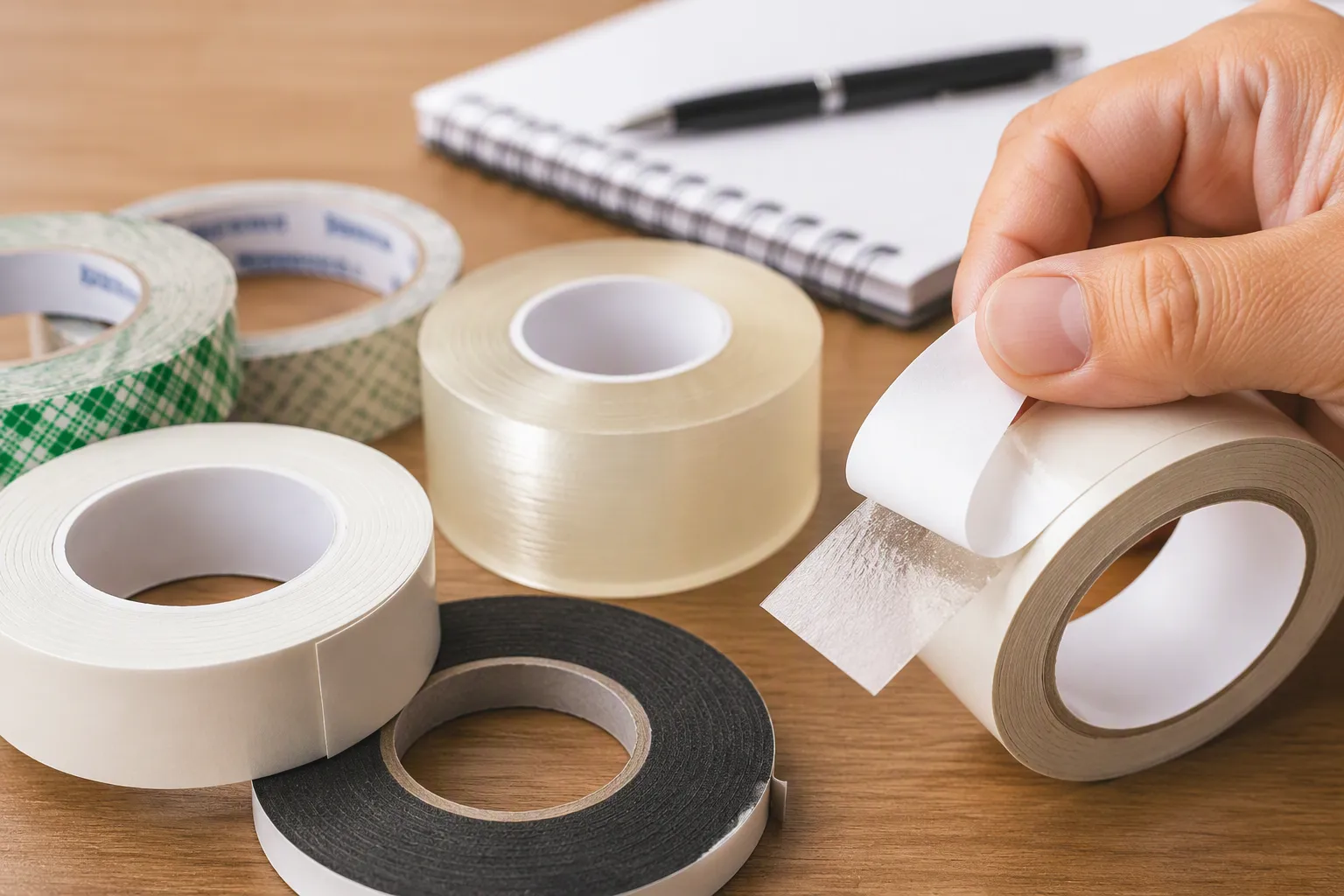
Double-sided tape, also called double-coated or double-faced tape, is an adhesive product with adhesive on both sides of a carrier. Three layers form its basic structure: the adhesive, the carrier, and a release liner. This construction allows the tape to bond two surfaces without visible fasteners. Demand for double sided tape keeps rising. Zion Market Research values the global market at USD 12.44 Billion in 2023. That figure should reach USD 23.29 Billion by 2032, a projected CAGR of 7.22% from 2024 to 2032. This guide explains the main types of double-sided tape. It also helps readers match a tape to their bonding, mounting, or sealing needs.
Key Takeaways
Double-sided tape bonds surfaces without visible fasteners and comes in many types for different industrial and commercial jobs.
Acrylic adhesive offers strong, durable bonds and resists heat, sunlight, and moisture far better than rubber.
Rubber adhesive provides quick, low-cost bonding for indoor tasks like packaging and office work.
Foam carriers fill gaps and absorb vibration, making them ideal for uneven surfaces and automotive trim.
Proper surface cleaning and firm pressure during application ensure a strong, lasting bond.
What Is Double-Sided Tape?
Composition and How It Works
A double sided tape carries adhesive on both faces of a central carrier. The industry also calls it double coated tape or double faced tape. The double-coated tape label appears often in technical datasheets, while the double-faced tape label appears often in general trade.
Three layers make up the product. The adhesive sits on each side and does the actual bonding. The carrier holds both adhesive layers together and gives the tape its body. The release liner protects the adhesive until the user peels it away. Each layer changes performance. A thicker carrier adds stiffness. A softer adhesive adds grip on rough surfaces. The liner choice also affects application speed. A split liner lets the user expose one adhesive side first.
Constructions fall into two broad groups. A double-sided tape with a tissue carrier stays thin, under 0.25 mm total, with a bondline of 0.05–0.25 mm. Foam-based tapes range from 0.25–3.0 mm, and common examples run 0.4–1.5 mm. Within foam, 0.4–0.6 mm suits lightweight bonds, 0.8–1.0 mm gives balanced strength, and 1.2–1.5 mm handles heavy-duty bonds.
Tape Type | Typical Thickness Range |
|---|---|
Paper-based (tissue carrier) | Under 0.25 mm total; bondline 0.05–0.25 mm |
Foam-based (acrylic foam) | 0.25–3.0 mm (common 0.4–1.5 mm) |
Advantages Over Other Fasteners
A double-sided tape hides the joint. Screws, rivets, and staples leave visible heads and holes. Tape leaves a clean surface. This matters in packaging, electronics, and automotive trim.
Tape also spreads stress across the whole bond area. A mechanical fastener concentrates force at a few points. A continuous adhesive layer distributes the load. Thin double-sided tape keeps profiles low. Thick foam tape absorbs vibration and seals gaps at the same time. Many double sided tape products also resist moisture and temperature swings, so they hold up outdoors and in machinery. No drilling or welding is needed with double sided tape, so the substrate stays intact.
Main Types of Double-Sided Tape by Adhesive
The adhesive layer decides how a tape grips, how long it lasts, and where it can go. Two chemistries dominate the market: acrylic and rubber. Each one suits different jobs.
Acrylic Adhesive Tapes
Acrylic adhesive delivers the strongest, most durable bond of the two families. It resists sunlight, aging, and moisture far better than rubber. The trade-off is cost. Acrylic double sided tape carries a higher price per roll, so buyers reserve it for demanding applications.
Temperature performance sets acrylic apart. A quality acrylic adhesive holds short-term heat resistance up to 280°C (540°F) and long-term tolerance of 177°C (350°F). It turns firm and glassy below -40°C (-40°F). The ideal application temperature sits between 21°C and 38°C (70°F to 100°F).
Property | Value |
|---|---|
Short-term heat resistance | up to 280°C (540°F) |
Long-term temperature tolerance | 177°C (350°F) |
Low-temperature behavior | firm/glassy below -40°C (-40°F) |
Ideal application temperature | 21°C to 38°C (70°F to 100°F) |
Gelly builds its double-coated tape range around solvent-based acrylic adhesive. The Double Sided PET Tape, the Pink PET Tape, and the Extreme PET 90mic Solvent Based all use this chemistry. Buyers get industrial-grade holding power in a double-faced tape format.
Rubber Adhesive Tapes
Rubber adhesive is the common alternative. It costs less than acrylic and bonds quickly to many surfaces. Rubber double-sided tapes grab paper, cardboard, and plastics with little pressure. This makes them a practical choice for packaging, printing, and general office work.
Rubber has limits. It degrades faster under UV light and heat. Modified adhesive versions improve the picture. Manufacturers blend rubber with resins or crosslinkers to raise heat resistance and slow aging. These modified grades close part of the gap with acrylic at a lower price. Buyers who need a budget-friendly double sided tape for indoor tasks often pick rubber. Buyers who need long-term outdoor performance choose acrylic instead.
Different Types of Double-Sided Tape by Carrier
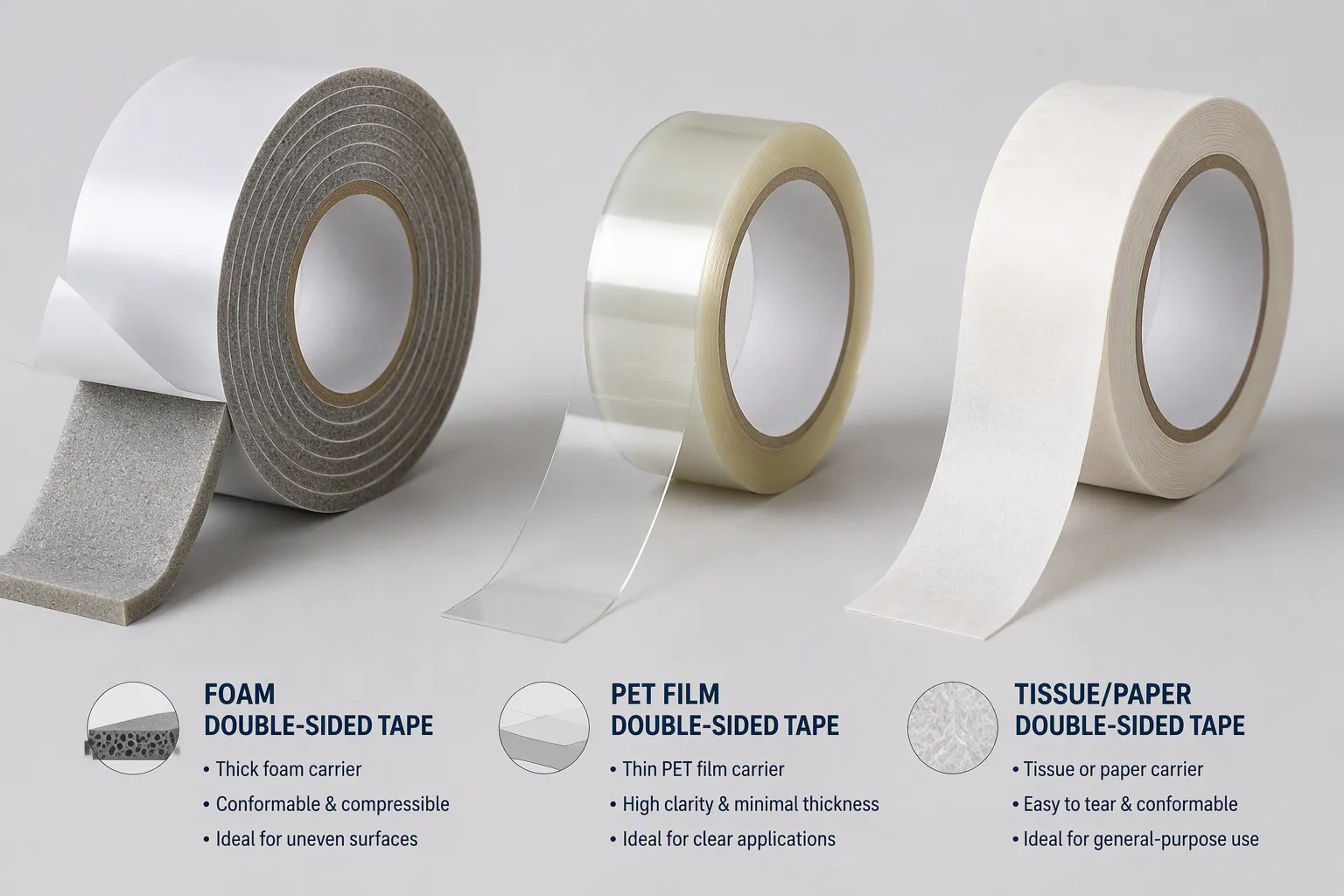
The carrier gives a double-coated tape its body, thickness, and handling character. Three carrier families cover most industrial and commercial work: foam, PET film, and tissue or paper. Each family produces different types of double-sided tape with distinct strengths.
Foam Tapes
A double-sided tape with a foam carrier adds thickness and compressibility. An acrylic foam tape fills gaps, absorbs vibration, and seals against dust and moisture. Gelly offers EVA, PE, and PVC foam options. Each EVA foam double-sided tape grade is waterproof and temperature-resistant, cushioning impact through its soft cell structure. A PE foam double-sided tape brings similar sealing behavior with a finer cell structure. A PU foam tape adds flexibility for curved surfaces and seals gaps on curved panels. Thick grades bridge gaps that thin films cannot fill. These double-sided tapes suit automotive trim, panel mounting, and weather sealing.
PET and Film Tapes
A double sided tape with a film carrier stays thin and resists stretching. A PET double-sided adhesive tape holds its shape under load, which keeps the bond line clean. Thin film carriers keep the profile low on electronic assemblies. The film also resists tearing during die-cutting. Gelly's Double Sided PET Tape comes in 80mic, 90mic, and 120mic versions, and the Pink PET and Extreme PET 90mic Solvent Based grades extend the range. A PET double-sided tape of this class resists plasticizer migration, weathering, and aging, so it works for long-term outdoor use.
Property | Rating |
|---|---|
Service temperature (short-term) | -20 to 180 °C |
Service temperature (long-term) | -20 to 120 °C |
Heat resistance (shear) | ≥24 h under 500g on 25×25 mm at 80 °C |
Weather/aging resistance | Resists plasticizer migration, weathering and aging; suitable for long-term outdoor use |
Outdoor certification | UL 969 approved for label-grade outdoor conditions |
Tissue and Paper Tapes
A double-sided tape with a tissue carrier gives a thin, conformable bond. Gelly's High Temperature 120mic Tissue Tape delivers high peel adhesion with short-term heat resistance up to 120°C. While the industry-standard 3M 9448A shows excellent initial peel on steel (24.5 N/25 mm), Gelly’s comparable high-temperature tissue tape delivers matching performance but offers more flexible MOQs, faster global lead times, and cost-effective OEM customization for bulk buyers.
Specification | Gelly High-Temp Tissue Tape (Comparable to 3M 9448A) |
|---|---|
Peel adhesion (steel), initial | ~24.5 N/25 mm (after 15 min) |
Peel adhesion (steel), aged | ~26.2 N/25 mm (after 72 h) |
Short-term temperature resistance | 150°C |
Long-term temperature resistance | 90°C |
Paper-based carriers serve printing and textile work. Paper mills use them for splicing and tabbing. Sewing rooms use them to hold fabric pieces or seams together during stitching. For general purpose bonding, a hot-melt tissue tape adds a fast-grabbing, cost-effective solution for everyday packaging and envelope sealing.
Specialty Types of Double-Sided Tape
High-Bond and Permanent Tapes
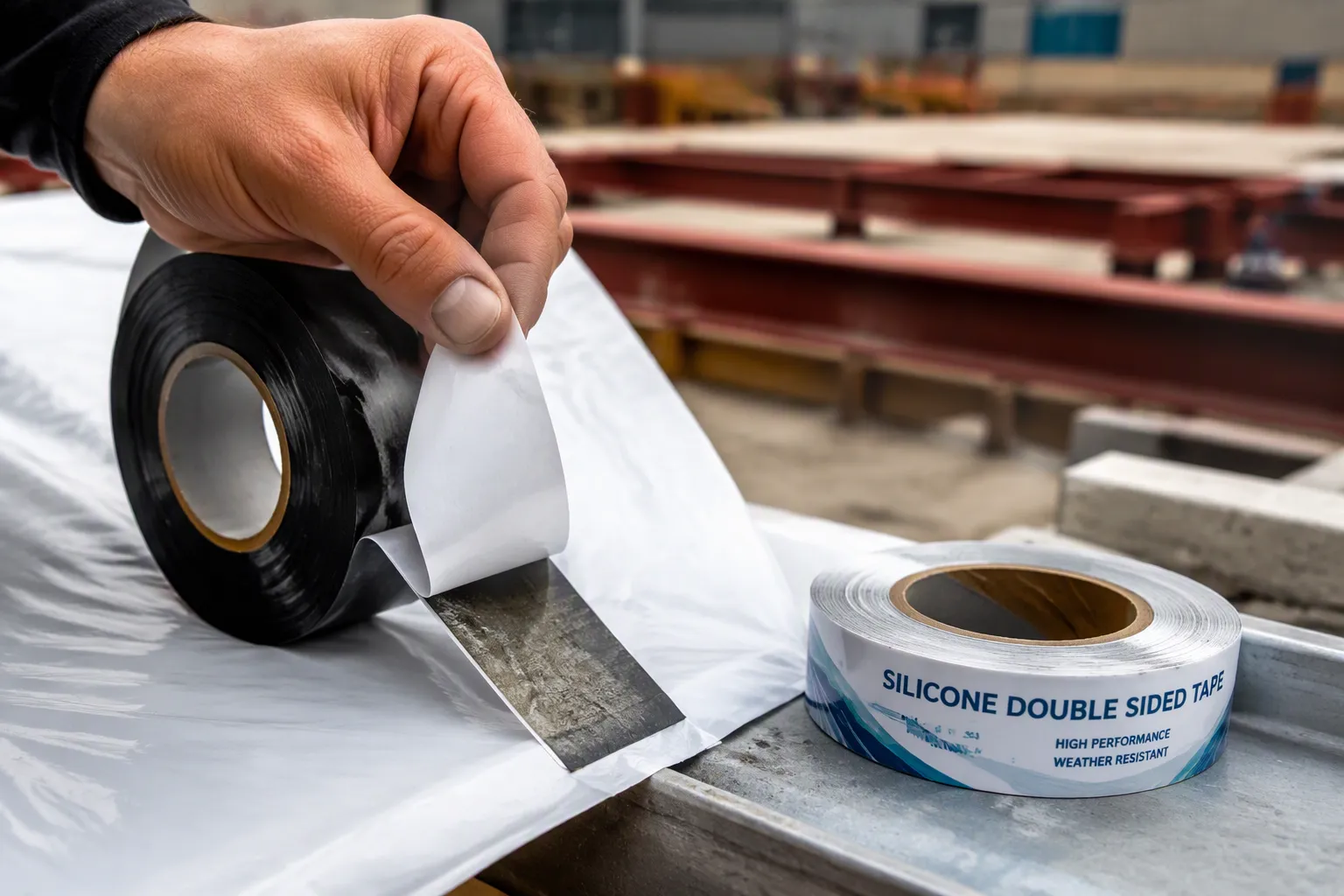
Some jobs demand a bond that never lets go. A double-sided butyl tape answers that call. Butyl rubber on both sides delivers high-tack bonding to polyethylene, steel, concrete, wood, and most construction substrates. Adhesion to PE measures 256 oz/in per ASTM D903. That grip creates a permanent seal on vapor barriers, crawl space liners, and reinforced plastic sheeting.
Property | Value |
|---|---|
Adhesion to Steel — Air Side (ASTM D903) | 240 oz/in (26.26 N/cm) |
Adhesion to Steel — Liner Side (ASTM D903) | 241 oz/in (26.37 N/cm) |
Adhesion to PE — Air Side (ASTM D903) | 256 oz/in (28.01 N/cm) |
Adhesion to PE — Liner Side (ASTM D903) | 166 oz/in (18.16 N/cm) |
Application Temperature | -1°C to 82°C (30°F to 180°F) |
Operating Temperature | -34°C to 93°C (-30°F to 200°F) |
The tape's operating range of -34°C to 93°C means it stays flexible in cold weather and stable in summer heat. Year-round installation works in most climates. Double-sided butyl tape contains no solvents, does not shrink, and resists heat up to a maximum of 90°C.
Double-sided butyl tape has strong adhesive on both sides, contains no solvents, does not shrink, is non-toxic, and resists high temperature up to a maximum of 90°C, earning it the name high-temperature-resistant sealing adhesive tape.
A silicone double-sided tape covers the extreme-heat end of the range. Silicone adhesives withstand extreme temperatures in automotive, aerospace, electronics, and industrial work. Gelly supplies invisible, permanent, or temporary bonding solutions across its range to meet these niche demands.
Removable and Repositionable Tapes
Not every bond should last forever. Removable tapes peel away cleanly and leave no residue. They suit mounting and display work, temporary signage, and layout checks before a final fix. Repositionable grades let the user lift and re-place an item several times. This flexibility saves material during trial fitting.
PE foam and PU foam tape grades bridge the gap between soft cushioning and clean removal. A double coated carpet tape holds rugs and mats flat while staying easy to lift later. For semi-permanent work, an acrylic foam tape offers strong adhesion with cleaner removal than structural grades. Match the tape to the lifespan of the job, and the result stays predictable.
How to Choose Double Sided Tape
Key Selection Criteria
Three factors drive every good decision: adhesive strength, surface compatibility, and environmental conditions. Start with the load. A light paper bond needs only a modest tack. A structural mount on metal or glass demands a high-performance double-sided tape with proven shear strength. Check the datasheet peel and shear values against the actual weight and stress of the job.
Next, match the adhesive chemistry to the substrate. Acrylic grips metal, glass, and most plastics with lasting hold. Rubber bonds paper and cardboard quickly at lower cost. Foam carriers bridge gaps and absorb vibration. Thin PET film keeps the profile low on electronic assemblies.
Environmental conditions decide the rest. Heat, cold, moisture, and UV exposure all shorten a bond's life. Buyers who source in volume should ask about OEM/ODM services and factory pricing. Gelly offers both, so bulk procurement keeps unit cost down without sacrificing adhesion quality.
Surface and Environment Matching
Surface energy matters as much as surface type. Smooth, high-energy surfaces such as metal and glass accept adhesive readily. Low-energy plastics and dusty or oily surfaces need cleaning first and may need a higher-tack grade. Rough or textured surfaces call for a foam carrier that can flow into the profile.
Application climate sets hard limits. The table below lists the working window for most double sided tape applications.
Parameter | Value |
|---|---|
Ideal application temperature | 21°C to 38°C (70°F to 100°F) |
Minimum application temperature | 10°C (50°F) |
Recommended dwell time | 72 hours |
Below-minimum note | Application below 10°C (50°F) not recommended |
Apply tape below 10°C and the adhesive stays too firm to wet out. The bond looks fine at first and fails later. Humidity also plays a role. Plan the bond for its full service life. A temporary display can use a removable grade. A permanent fixture needs a high-performance double-sided tape with strong aging resistance.
Installation Tips for Best Results
Surface Preparation
A clean surface is the foundation of every strong bond. Bonding surfaces must be unified, clean, and dry before any double sided tape goes down. A common cleaning method combines isopropyl alcohol with water at a 70:30 ratio. Saturate a lint-free cloth with the mixture, wipe the entire surface for full coverage, and let it dry completely.
Heavy oils, grease, and oxidation need more work. Use a degreaser or solvent-based cleaner first, then follow with the alcohol and water wipe. Mechanical cleaning with a scrub pad, fine steel wool, or sandpaper removes rust and chipped paint. Fine circular scratches work better than straight-line scratches. This abrasion removes oxidation and increases surface area, which improves both immediate and long-term bond strength.
Application Techniques
Firm pressure during roll-down makes the adhesive wet out onto the surface. Apply at least 15 psi (100 kPa) across the whole bond area. (This is roughly equivalent to pressing down firmly with a standard J-roller or applying heavy, consistent hand pressure across the entire surface.) Strength then builds over time. At room temperature, the bond reaches roughly 50 percent of ultimate strength after 20 minutes, 90 percent after 24 hours, and 100 percent after 72 hours. Elevated temperature, such as 66°C (150°F) for one hour, can accelerate and increase the final bond strength.
Work from one edge to the other to push air bubbles ahead of the tape. A roller or a firm hand pass removes trapped air and seats the adhesive. Gelly foam tapes come with various liner options for easy application. A split liner lets the user expose one adhesive side first, which keeps placement accurate on large panels.
Quick Comparison Table
The double-sided tape selection & comparison table below puts the main families side by side. Read across each row to match adhesive chemistry, carrier, strength, and best use to a specific job.
Adhesive Type | Carrier | Strength | Best Use | Gelly Example |
|---|---|---|---|---|
Acrylic (solvent-based) | PET film | High; long-term heat to 177°C | Electronics, outdoor mounting | Double Sided PET Tape |
Acrylic (solvent-based) | PET film, pink | High; strong shear hold | Display work, visible joints | |
Acrylic | EVA, PE foam | High; gap-filling | Automotive trim, panel sealing | |
Acrylic | Tissue | High peel; heat to 120°C | Splicing, nameplates | |
Hot Melt / Rubber | Tissue | Moderate; quick grab | Envelope sealing, packaging | |
Rubber or acrylic | PE Foam / Scrim | Moderate; tear-resistant | Rug and mat holding |
Use this double sided tape chart as a starting point, then confirm the exact grade against its datasheet before ordering.
This guide covered the main types of double-sided tapes in two groups. The adhesive family splits into acrylic and rubber. The carrier family splits into foam, PET film, and tissue or paper. Choosing a double sided tape starts with the load, the surface, and the climate. The right double-sided tape disappears into the joint and holds for years.
FAQ
How long does double sided tape take to reach full strength?
Bond strength builds over time. At room temperature, the tape reaches about 50 percent of ultimate strength after 20 minutes, 90 percent after 24 hours, and 100 percent after 72 hours. Warmth speeds this up. One hour at 66°C (150°F) can raise the final bond strength.
Can double-sided tape hold outdoors?
Many grades handle outdoor exposure well. Solvent-based acrylic PET tapes resist weathering, aging, and plasticizer migration, so they suit long-term outdoor use. Rubber grades degrade faster under UV light and heat, so reserve them for indoor work.
What is the difference between acrylic and rubber adhesive?
Acrylic adhesive delivers the strongest, most durable bond. It resists sunlight, moisture, and aging, and it tolerates high heat. Rubber adhesive costs less and grabs quickly, which suits packaging and general office tasks.
Does surface temperature affect installation?
Yes. The ideal application window runs from 21°C to 38°C. Application below 10°C is not recommended. Cold adhesive stays firm and cannot wet out properly. Clean, dry surfaces and firm roll-down pressure complete a reliable installation.
Does Gellytech offer custom die-cutting and OEM/ODM services?
Yes. Beyond standard jumbo rolls and log rolls, Gellytech provides precision die-cutting services to supply tapes in custom shapes, widths, and lengths. We also fully support OEM/ODM projects with tailored adhesive formulations, customized release liners, and private labeling to meet your specific market needs.
How can I get samples to test before placing a bulk order?
We understand that testing is crucial for bonding applications. You can easily request free samples of our PET, foam, or tissue tapes by contacting our sales team. We always recommend testing the tape on your actual substrates under your specific environmental conditions to ensure the best match.
Need a Reliable Double-Sided Tape Manufacturer?
Whether you need high-temperature PET tapes, gap-filling foam tapes, or custom die-cut solutions, Gellytech delivers industrial-grade adhesion with factory-direct pricing.