


Double Sided Tape Selection Guide for 2026
 Oct 12, 2026|
 View:3
Choose double sided tape in 2026 by matching adhesive chemistry and carrier to your surface, environment, and permanence needs. The wrong double-sided tape peels, leaves residue, or fails under load. That mistake costs time and money.
According to industry reports, the global double-sided tape market size is estimated at USD 15.4 billion in 2026.
This guide explains the types of double sided tape available, the factors that drive selection, and the applications where each type performs best. Surface material, temperature, and removal requirements all shape the final choice. A careful match prevents bond failure and protects your project. Start with the surface, then work outward to environment and permanence.
Key Takeaways
Match the tape to your surface. Smooth surfaces need thin tape. Rough surfaces need thick foam tape.
Check the temperature range. Silicone tape handles extreme heat. Acrylic foam tape works well outdoors.
Choose permanent or removable tape based on your needs. Permanent tape bonds strongly. Removable tape peels off cleanly.
Test a small area first. This prevents bond failure and saves money on rework.
Clean surfaces before applying tape. This helps the tape stick better and last longer.
What Is Double Sided Tape?
Double sided tape is an adhesive tape with glue on both sides. In the adhesive industry, it is commonly referred to as double-coated or double-faced tape. The tape connects two surfaces and becomes invisible when sandwiched between them. A double-coated tape works like a hidden fastener. You peel the liner, press the tape onto one surface, then press the second surface on top. The bond forms without screws, staples, or liquid glue.
Carrier, Adhesive, and Liner
Every double coated product has three core parts. The carrier is the middle layer. It holds the adhesive and gives the tape its body. Common carrier materials include paper, plastic film, tissue, foam, cloth, and polyester. A tissue carrier tears by hand. A polyester carrier resists stretching. The adhesive system sits on both sides of the carrier. Rubber-based, solvent-based, acrylic, and hot-melt adhesive systems are common. The release liner covers the adhesive until you use the tape. Paper and film liners are both common. A polyester liner offers high strength and tear resistance. A kraft paper liner costs less and works well for labels.
Transfer tape is a related product. It has no carrier. The adhesive sits on a liner alone. Transfer tape works well for permanent bonding where thickness does not matter. A two sided tape with a carrier is easier to handle. The carrier also lets manufacturers apply different adhesives to each side. That helps when you bond dissimilar materials.
How Double-Sided Tape Bonds
Pressure-sensitive adhesive forms a bond through wetting. The adhesive spreads and touches the surface. High surface energy materials like glass and aluminum attract the adhesive strongly. The bond builds over time, gaining strength after application. Low surface energy plastics like polyethylene and polypropylene resist wetting. Initial adhesion is weaker on those surfaces. A double-sided adhesive tape made for low surface energy substrates wets out better. Heat and pressure during application speed up the wet-out process.
Main Types of Double-Sided Tape
Manufacturers group the main types of double-sided tapes by carrier and adhesive. The carrier gives body. This system sorts the types of double sided tape available. PET film provides dimensional stability, foam is used for mounting and sealing, and tissue tears easily. Double coated means adhesive on both sides of the carrier.
Foam, Tissue, and PET Tapes
The different types of double-sided tape start with the carrier. Foam tape uses an adhesive-coated foam backing and is available in a range of thicknesses. Double coated foam tapes are used for sealing, weather-stripping, and mounting.
Tissue tape uses a thin non-woven carrier. PET tape uses a polyester carrier. It resists stretching and holds exact dimensions. Many double sided tapes are double coated and are supplied with a release liner over one or both sides. These main types of double-sided tapes answer most mounting needs.
Acrylic, Rubber, Butyl, and Silicone Tapes
After the carrier, choose the type of adhesive. Acrylic offers high shear strength and long-term aging resistance, while rubber provides quick initial tack. Acrylic foam tape is ideal for structural mounting, and many industrial-grade solutions pair acrylic with a PET carrier for dimensional stability. Specialized constructions may even use different adhesives on each side to bond dissimilar materials effectively.
Butyl tape bonds securely to metal, glass, wood, and concrete while offering excellent water resistance. For extreme environments, silicone adhesives provide superior heat resistance. Butyl and silicone variants excel in harsh outdoor conditions, resisting UV degradation and handling heavy loads. For complex applications like engine compartments or exterior window sealing, selecting the right heavy-duty tape requires testing under actual working conditions to ensure it can handle the specific load and environmental demands.
Step-by-Step Selection Guide
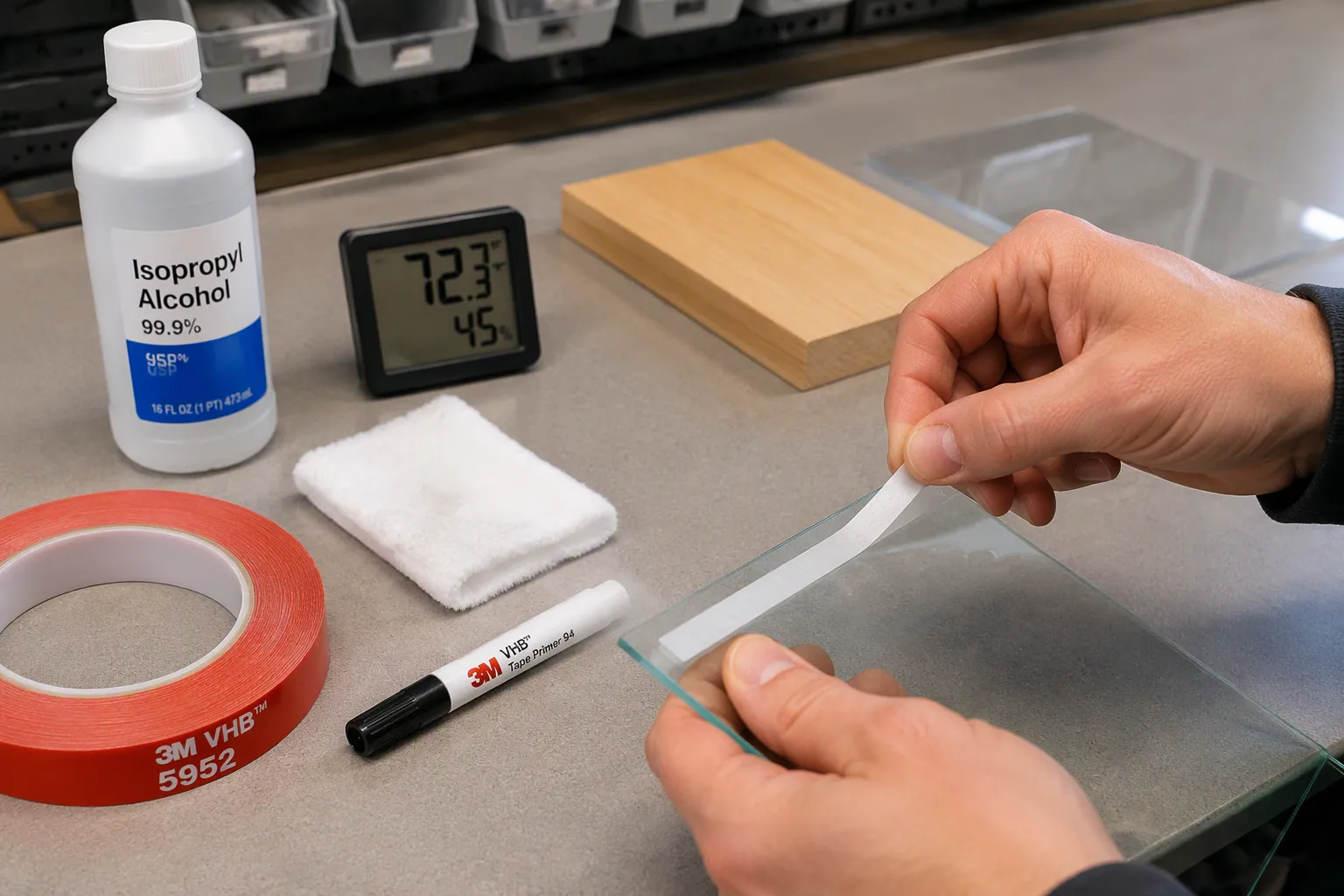
You now know the main types of double-sided tape. The next step is matching a tape to your exact job. This process follows several steps. Each step narrows your options until one tape remains.
Match Tape to Surface and Energy
Start by inspecting both surfaces you plan to bond. Smooth, flat substrates such as glass, aluminum, or PVC accept thinner tape. Rough surfaces such as wood, cement, brick, or stucco need thicker tape with more adhesive contact.
Next, determine the surface energy of each material. Surface energy decides how well an adhesive wets out and grips. Low surface energy materials are very difficult to bond. Polypropylene is a common low-surface-energy plastic, while glass has high surface energy. That gap explains why glass bonds easily and polypropylene fights back.
Materials with low surface energy are considered very difficult to bond.
Clean both surfaces before application. Wipe with an isopropyl alcohol and water mixture. Degrease heavy oils with a solvent-based cleaner, then follow with an IPA wipe. Light abrasion with a fine pad increases surface area. Apply a primer on low surface energy plastics to raise their energy and promote wet-out. This matters because most adhesion failures on low surface energy substrates come from poor surface preparation, not from the adhesive itself.
For low surface energy plastics, choose an LSE-formulated adhesive. Standard tapes sit on top of the surface instead of wetting out. Tackifiers and cross-linking chemistry in LSE adhesives overcome this limitation. This is how to select the ideal double-sided tape for difficult plastics.
Check Temperature and Environment
Temperature resistance sets the second filter. Foam and tissue tapes each have a service-temperature range. Match the tape's service range to your actual conditions. Cold weakens adhesive tack. Extreme heat makes the adhesive soft or brittle.
Outdoor use adds weather, water, and UV exposure. Acrylic adhesives offer good weather and aging resistance. Rubber lacks aging resistance. Silicone handles extreme temperatures. For humid environments, water and mildew resistance are required. Water immersion reduces adhesion because water interferes with interfacial interactions and causes swelling that weakens bonding.
Apply tape in conditions close to room temperature. Temperature or humidity changes during curing can weaken the bond prematurely. Avoid unnecessary UV exposure during application and curing.
Choosing the right double sided tape for outdoor jobs means checking UV stability, chemical resistance, and moisture tolerance. Acrylic foam tape is preferred for outdoor and high-performance applications. For hot or humid conditions, PET or acrylic foam tape works well. These industrial double sided tapes resist temperature fluctuations and humidity-related degradation. The best industrial double sided tapes balance adhesive strength and compatibility with materials against the demands of the environment.
Permanence and Removal
Permanent vs. Removable Adhesives
Permanence is a design choice, not an accident. A permanent double sided tape builds strong, durable bonds for the life of the product. A removable double-sided tape holds temporarily and peels away cleanly. The adhesive chemistry differs between these two goals.
Formulation aspect | Permanent tape | Removable tape |
|---|---|---|
Design objective | Strong, long-term bonding | Temporary adhesion with clean removal |
Adhesive chemistry | High-tack acrylic or permanent PSA | Low-tack acrylic, rubber, or silicone |
Removal behavior | Not intended for clean removal | Minimal residue, no surface damage |
Acrylic adhesives are typically permanent. Removability comes from low-tack or specialty systems. Some double coated constructions combine a permanent adhesive on one side with a removable adhesive on the other. Acrylic adhesives build toward full strength over time; rubber adhesives develop strength faster but offer lower long-term performance.
Fabric work shows this split clearly. Temporary basting uses a removable double coated tape to hold seams during sewing. Heat-bond permanent seams use a double coated tape that fuses under an iron. The same carrier, different adhesive, two different outcomes.
Clean Removal and Residue Control
Residue removal depends on the surface and the adhesive. Rubbing alcohol works on glass, plastic, and metal. Vinegar suits glass and plastic. Mineral spirits handle metal. Heat from a hairdryer softens adhesive on most surfaces. Commercial adhesive removers work on large, hard areas.
Before trying any removal method, test it on a small, inconspicuous area first. This ensures the method does not cause damage or discoloration.
Follow these tips for using double sided tape removal safely. Apply rubbing alcohol to a microfiber cloth and scrub in circles. Use warm soapy water on delicate surfaces, then rinse and dry. Natural oils break down rubber-based residue on wood or leather. Heat and a plastic scraper lift adhesive from glass or metal. Avoid acetone on plastics, painted surfaces, and varnished wood. Choose transfer tape when you need a thin, permanent bond with no carrier.
Quick Comparison of Types of Double-Sided Tape
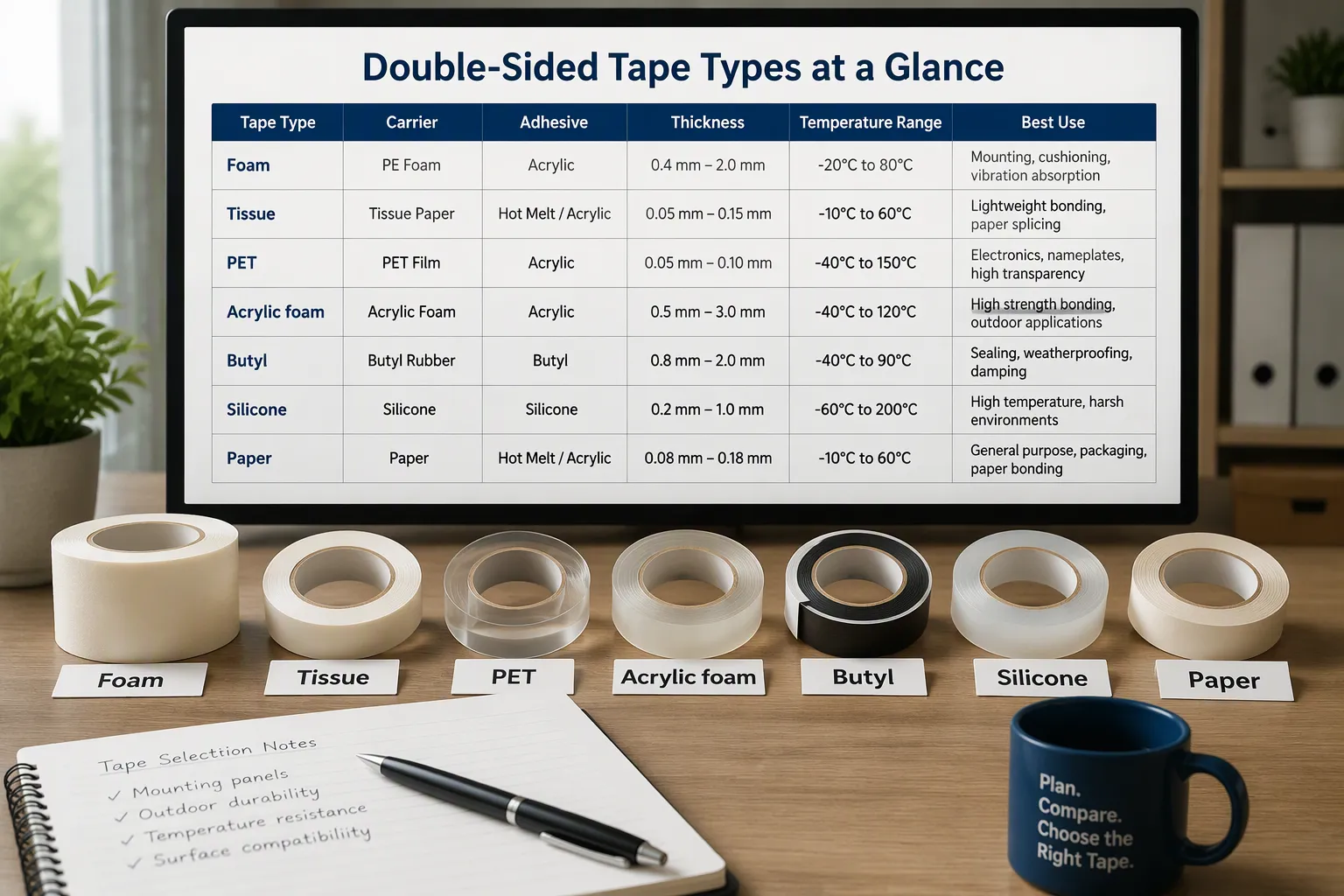
Tape Types at a Glance
A double-sided tape selection & comparison table turns the earlier factors into one scannable view. The table below lists carrier, adhesive, thickness, temperature range, and best use for each family. Use it as a starting filter, then confirm the choice against your surface and environment.
Tape Type | Carrier | Adhesive | Thickness | Temperature Range | Best Use |
|---|---|---|---|---|---|
Foam | Adhesive-coated foam | PSA | Customizable (Typ. 0.5mm – 3.0mm) | Typ. -40°C to 90°C | Sealing, weather-stripping, mounting |
Tissue | Non-woven tissue | Rubber or acrylic | Thin (Typ. 0.08mm – 0.15mm) | Typ. -10°C to 80°C | Splicing, light mounting, general industrial work |
PET | Polyester film | PSA | Thin film (Typ. 0.05mm – 0.2mm) | Typ. -20°C to 150°C | Electronics, nameplates, precise die-cutting |
Acrylic foam | Acrylic foam | Acrylic | Customizable (Typ. 0.5mm – 2.0mm) | Typ. -40°C to 150°C | Structural mounting, automotive trim |
Butyl | Butyl rubber | Butyl | Customizable (Typ. 1.0mm – 3.0mm) | Typ. -40°C to 90°C | Window sealing, metal, glass, concrete |
Silicone | Customizable carrier | Silicone | Customizable | High-heat capable (Typ. -50°C to 200°C+) | Engine compartments, high-heat bonding |
Paper | Paper | PSA | Thin | Moderate (Typ. 0°C to 60°C) | Light-duty craft and office tasks |
Picking the Right Row
Read the table from left to right. Start with the carrier column, because the carrier sets thickness and conformability. A foam row fits uneven surfaces. A PET row fits flat, precise work. Then check the adhesive column against your permanence goal.
The temperature column eliminates unsafe options fast. Silicone handles high heat, while tissue has a more moderate temperature limit. The best industrial double sided tapes for hot engine areas come from the silicone row. The best industrial double sided tapes for wet exterior seals come from the butyl row.
Automotive trim shows how rows combine. A professional-grade acrylic foam tape at a trim-friendly thickness suits side moldings on painted metal. Differential constructions pair silicone on one side with acrylic on the other, or solvent acrylic with rubber, and these industrial double sided tapes bond low surface energy plastics and painted surfaces. That is why industrial double sided tapes dominate exterior emblem and trim work. When two rows seem to fit, test both on a small area before committing.
Common Applications and Tape Choices
Home, Office, and Craft
Household work favors thin, clean-bonding products. Paper, cardstock, and photos need an adhesive that will not damage them. A permanent adhesive roller suits scrapbooking, cardmaking, and office paper bonding. This tool lays a thin, even strip that will not wrinkle the page.
Clean-bonding construction for scrapbooks and cards
Permanent adhesive for crafting, card making, and office paper
A compact roll format for repeated light-duty use
Packaging, label printing, and textile splicing also rely on double sided tape. A tissue carrier tears easily for paper and fabric work. A PET carrier holds precise edges on printed sheets. These double sided tape applications reward a thin profile and a clean peel.
Automotive, Industrial, and Outdoor
Exterior trim, spoilers, and emblems demand a structural bond. An acrylic foam tape in a custom thickness handles that load. Suppliers like Gelly Tech, with over 30 years of manufacturing experience, support OEM and ODM co-engineering. We build these products under strict quality-management standards, offering customization in color, thickness, adhesive chemistry, liner type, and packaging (including jumbo rolls and precision die-cut parts) to meet diverse production needs.
Attribute | Detail |
|---|---|
Recommended tape | Acrylic foam tape, custom thickness |
OEM alignment | Co-engineered, built under quality-management standards |
Testing | Peel adhesion, static shear, aging, fogging |
Production format | Die-cut parts on kiss-cut liners |
Agriculture, electronics, and outdoor sealing follow the same logic. Buyers can specify exact requirements to match their bonding, mounting, holding, splicing, and packaging applications across many production environments.
Your final double sided tape choice rests on these checks: surface material, surface energy, temperature, environment, and permanence. A smooth glass panel accepts a thin PET double-sided tape. A rough exterior wall calls for thick foam. Low surface energy plastics need an LSE adhesive. Hot engine areas need silicone. Outdoor seals need butyl or acrylic. Removable craft work needs low-tack. Permanent assembly needs high-tack. Matching the tape type to the job prevents peeling, residue, and bond failure. That match saves money on rework and replacements. Before full application, test a small area. For complex jobs, consult a tape specialist. A short trial prevents a long repair.
Need a tailored bonding solution?
Contact Gelly Tech’s adhesive specialists today to discuss your custom double-sided tape requirements, request samples, or get a tailored solution for your specific industry application.
Contact Us for Custom SolutionsFAQ
These answers address common questions about choosing a double sided tape.
How long does double-sided tape take to reach full strength?
Pressure-sensitive bonding builds over time. Room-temperature bond strength continues to increase after application; heat and pressure speed the cure.
Will double-sided tape hold on rough surfaces?
Yes — choose the right thickness. Smooth substrates like glass and aluminum accept thin PET or tissue products. Rough surfaces such as wood, brick, or stucco need thicker foam tape with more adhesive contact to fill uneven gaps.
Does double-sided tape survive cold weather?
Many formulations resist cold. Use a tape rated for the expected temperature, and apply near room temperature, since cold weakens tack during initial bonding.
Transfer tape or carrier tape — which should I choose?
Transfer tape has no carrier, leaving only pure adhesive. It suits thin, permanent bonds where extra thickness would show. A double sided tape with a carrier, such as PET or tissue, handles easier and resists tearing for demanding jobs.


Recent News
1.Gelly Company: Innovating with Double-Sided PET Tape
2024-04-072.How to Remove Double Sided Tape from Walls
2026-01-053.Gelly is the manufacturer of double Sided eva foam tape
2024-03-284.Double sided pet tape, a good helper to prevent cats from scratching furniture
2018-12-035.Product Brief of double sided eva foam tape
2018-11-27