


Colored BOPP Tape vs Standard Tape: Which Should You Choose?
 Sep 18, 2026|
 View:2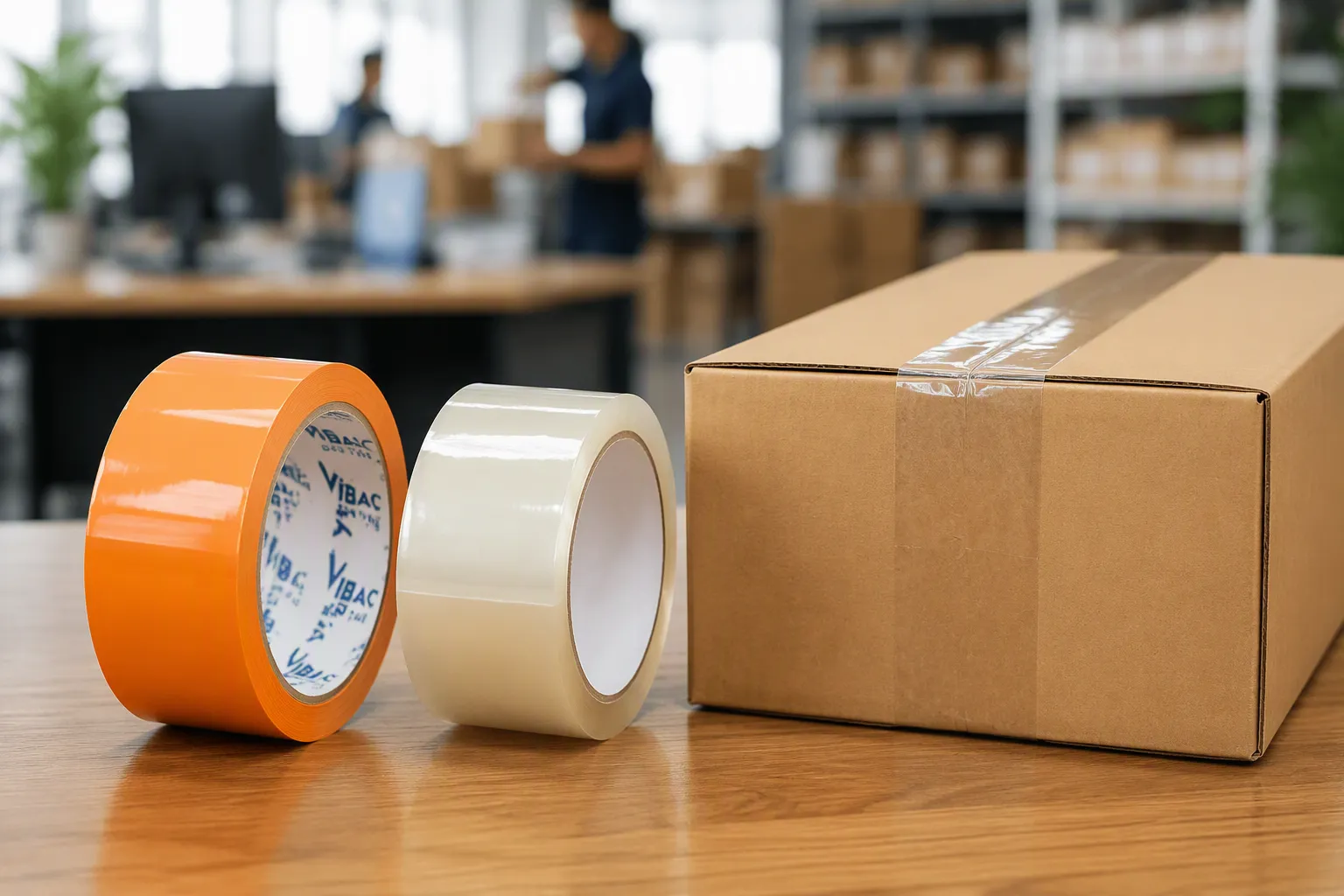
In modern supply chains, a frequent operational dilemma emerges: warehouse managers often default to standard clear tape for its speed and cost-efficiency, while marketing teams advocate for custom colored BOPP tape to maximize brand visibility. Neither option possesses universal superiority. Instead, the optimal decision hinges on whether immediate cost reduction or long-term brand security drives your business strategy. While standard tape serves as the utilitarian workhorse for high-volume logistics, colored BOPP tape functions as a strategic asset for security and customer engagement. This comprehensive comparison examines durability, cost dynamics, and branding impact to help you identify the ideal packaging tape for your operational priorities.
Key Takeaways
Colored BOPP tape transforms packaging into a strategic asset, boosting brand visibility and providing immediate tamper evidence.
Standard tape remains the most cost-effective solution for high-volume operations with minimal branding requirements.
Custom printed and colored tapes act as a visual deterrent, making any unauthorized package breach instantly noticeable.
While standard tape offers wide availability and low upfront costs, it lacks the structural security and marketing benefits of premium alternatives.
Ultimately, prioritize colored tape for brand identity and security, or standard tape for pure operational efficiency and budget management.
What Is Colored BOPP Tape?
Definition and Composition
Biaxially Oriented Polypropylene (BOPP) forms the robust film backing of this packaging solution. During manufacturing, the polypropylene is stretched in both machine and transverse directions, yielding a highly durable and tear-resistant film. Gelly manufactures premium colored BOPP tape utilizing a specialized, high-tack water-based acrylic adhesive. Unlike standard formulations, this modified adhesive delivers instant initial grab and permanent adhesion. Available in thicknesses ranging from 45 microns to 90 microns, the thinner variants are ideal for lightweight bundling, while the heavy-duty options guarantee secure carton sealing for industrial transit.
Beyond functionality, customization is a core advantage. Businesses can seamlessly integrate corporate logos or slogans directly onto the tape surface, ensuring precise Pantone color matching. The standard palette includes red, blue, brown, pure white, green, beige, tan, yellow, and black, with bespoke colors available upon request. Supporting diverse packaging needs, the tape is available in widths from 12mm to 1280mm. Engineered for moisture and temperature resistance, it features a no-bubble surface that guarantees smooth, quiet, and efficient application on the packing line.
Common Business Applications
E-commerce brands leverage colored BOPP tape to turn every outbound shipment into a mobile marketing touchpoint, significantly enhancing the unboxing experience and building long-term brand equity. In complex logistics environments, facility managers utilize color-coding systems to streamline warehouse organization—assigning specific colors to distinct departments, shipping zones, or priority levels to accelerate sorting and reduce fulfillment errors.
Furthermore, retail and manufacturing sectors rely on these tapes for both aesthetic shelf appeal and robust inventory management. The distinct visual profile of the tape provides inherent tamper evidence; any attempt to slice or remove the seal leaves obvious residue or breaks the continuous pattern, allowing handlers to instantly identify compromised cartons before they reach the end consumer.
What Is Standard Packaging Tape?
Definition and Composition
Standard packaging tape typically encompasses clear or brown BOPP variants. While sharing the same foundational BOPP film, the primary distinction lies in the adhesive chemistry. Budget clear tapes generally utilize a basic acrylic adhesive, whereas brown tapes often employ a hot melt (rubber-based) adhesive. Basic acrylic adhesives can exhibit a delayed bonding curve, requiring dwell time to achieve maximum shear strength, though they excel in UV and aging resistance. Conversely, hot melt adhesives offer aggressive initial tack, allowing for rapid sealing without prolonged pressure, but they may soften under extreme heat or struggle in highly humid environments.
The table below summarizes the core performance differences between these standard adhesive systems.
Adhesion Property | Acrylic Adhesive (Clear BOPP) | Hot Melt Adhesive (Brown BOPP) |
|---|---|---|
Initial Tack | Moderate; requires slight dwell time for maximum bond | Aggressive; provides instant, high-strength grab |
Temperature Resistance | Excellent; maintains stability in extreme fluctuations | Fair; may soften under excessive heat or freeze in deep cold |
Durability Over Time | Superior; resists yellowing and degradation over long periods | Good; optimized for active, shorter-term shipping cycles |
Application Speed | Ideal for automated lines where environmental stability is key | Supports high-speed manual and semi-auto sealing operations |
Humidity Performance | Highly resistant to moisture and humid storage conditions | Can lose adhesion on heavily corrugated boards in high humidity |
Brown tape is traditionally favored in heavy logistics because its earthy tone blends seamlessly with standard corrugated cardboard, creating a uniform, professional appearance that masks scuffs and dust during multi-leg transit.
Common Business Applications
High-volume fulfillment centers and third-party logistics (3PL) providers rely on standard brown or clear tape as their default operational baseline. In these environments, throughput speed and cost-per-package metrics heavily outweigh aesthetic considerations. Fast-Moving Consumer Goods (FMCG) manufacturers utilize standard options for secondary and tertiary packaging, where uniform adhesion across varied recycled carton surfaces is paramount.
For export operations facing maritime humidity, clear acrylic tapes are often specified due to their moisture resistance. Meanwhile, rapid-turnaround domestic shipping lines frequently prefer hot melt brown tapes for their immediate grip, ensuring cartons remain sealed even when subjected to immediate tension on conveyor belts.
Head-to-Head Comparison: Key Features
Adhesion Strength and Durability
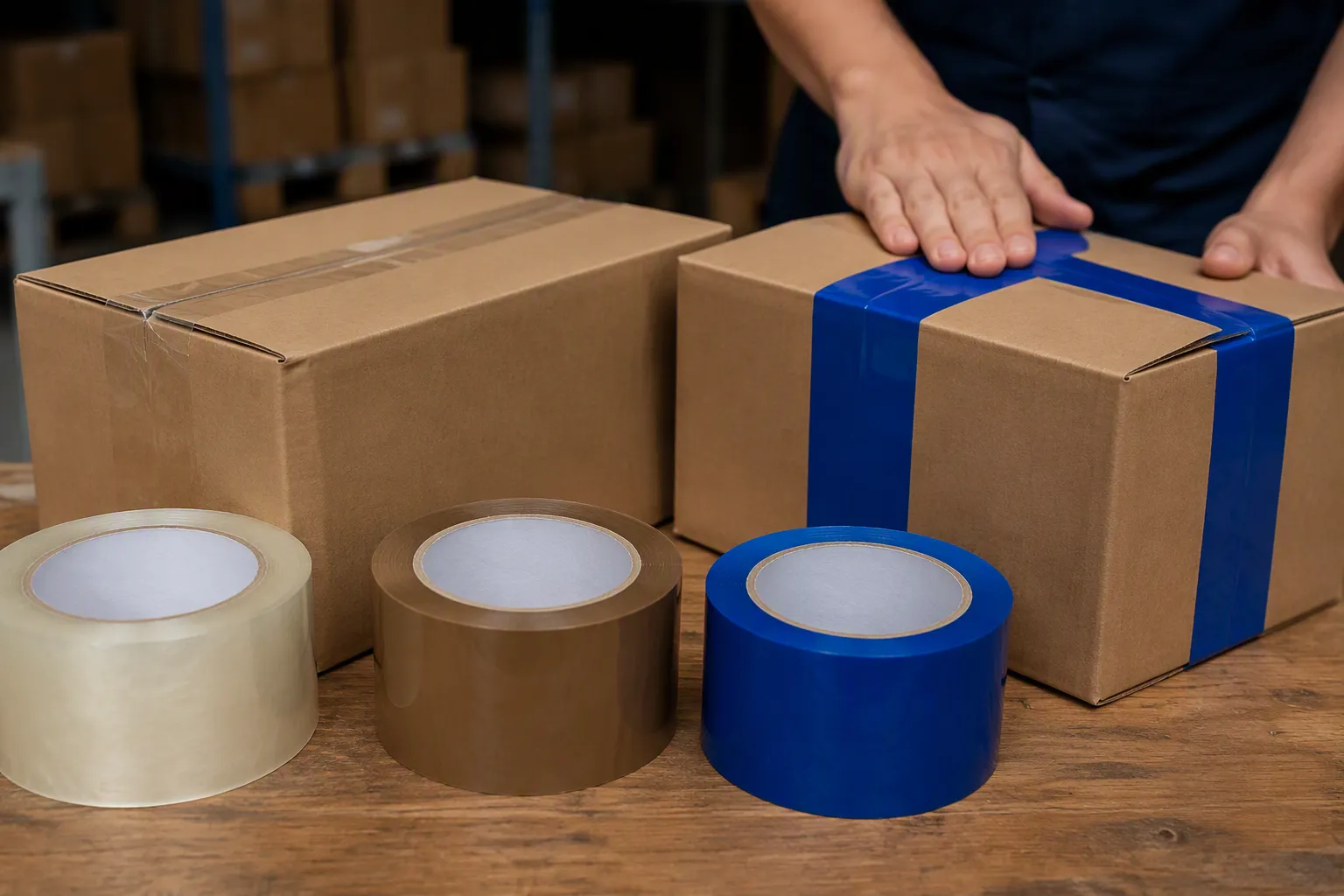
Standard clear tape, particularly budget variants with thinner films, is prone to snapping under sudden tension during high-speed automated application. The basic adhesive requires dwell time to form a complete bond, making it more suited for light-duty sealing in controlled environments.
In contrast, Gelly’s colored BOPP tape delivers superior resilience not merely due to its pigmentation, but through its engineered construction. By utilizing a reinforced BOPP backing (up to 90 microns) paired with a modified high-tack water-based acrylic adhesive, the tape bonds instantly and resists edge-tearing during application. This structural integrity ensures consistent performance across thousands of daily applications, drastically reducing downtime caused by tape breakage on the packing line.
Furthermore, environmental resilience is critical for export and cross-country shipping. Gelly's premium formulations maintain closure integrity despite severe temperature fluctuations and high humidity. Unlike standard tapes that may peel or lift when exposed to cold-chain transit or dusty recycled cartons, this heavy-duty tape ensures the seal remains uncompromised from the warehouse dock to the customer's doorstep.
Aesthetics and Brand Visibility
Standard clear and brown tapes are designed to disappear. While this provides a uniform look for bulk logistics, it entirely forfeits the opportunity to communicate brand identity. The packaging remains a blank canvas, offering no visual engagement to the recipient or bystanders during transit.
Colored and printed tape fundamentally shifts packaging from a consumable expense to a strategic marketing channel. Every sealed carton becomes a mobile billboard. E-commerce brands leverage this to initiate the "unboxing experience" before the customer even opens the box. A delivery truck carrying dozens of distinctly branded packages generates thousands of organic impressions daily, significantly lowering overall customer acquisition costs.
Beyond marketing, color psychology plays a vital role in brand positioning. Eco-conscious brands utilize green tones to signal sustainability, while premium tech companies might opt for stark black or metallic hues to convey exclusivity. This visual consistency reinforces brand equity at every physical touchpoint, a benefit that standard tapes simply cannot provide.
Cost Analysis: Price Per Roll vs. Value Added
Upfront Costs and Volume Discounts
Standard budget tapes undeniably win on initial price-per-roll metrics. However, this upfront saving often masks hidden operational risks. Cheap adhesives frequently fail in transit, leading to open cartons, damaged goods, and expensive chargebacks. When a warehouse must repackage and reship a compromised order, the financial loss vastly exceeds the pennies saved on inferior tape.
While colored BOPP tape commands a higher initial investment, it reflects the cost of premium raw materials and specialized printing processes. Gelly offers aggressive volume discounts for bulk procurement, effectively narrowing the price gap. When factoring in the drastic reduction in packaging failures, returns, and transit damage, the Total Cost of Ownership (TCO) for premium colored tape often proves far more favorable for mid-to-high margin businesses.
The Hidden Value of Brand Recognition
The financial return on branded packaging extends far beyond the physical seal. Repeated visual exposure builds consumer trust and top-of-mind awareness. When a package sealed with custom printed logos sits on a porch or is carried through a busy office, it acts as continuous, zero-click advertising. This organic reach supplements broader marketing campaigns, turning a routine logistical necessity into a powerful driver of brand loyalty and repeat purchases.
Pros and Cons of Colored BOPP Tape
Advantages: Branding and Tamper Evidence
The primary advantage of colored BOPP tape is its dual function as a marketing vehicle and a security seal. Custom printing ensures that brand identity travels with the product, creating market differentiation. More importantly, the distinct color and pattern serve as a highly effective tamper-evident mechanism. Unlike clear tape, which thieves can easily replicate or reseal invisibly, breaking a custom-colored seal leaves undeniable visual proof of unauthorized access, protecting high-value inventory like electronics and pharmaceuticals.
Disadvantages: Cost and Inventory Complexity
The barrier to entry is primarily financial and logistical. Custom printing requires longer lead times and higher Minimum Order Quantities (MOQs) compared to off-the-shelf standard tapes. Additionally, facilities utilizing multiple colors for warehouse sorting must manage a more complex inventory of SKUs, requiring dedicated storage space and strict stock rotation to ensure the right tape is always loaded on the dispenser.
Pros and Cons of Standard Tape
Advantages: Cost Savings and Availability
Standard clear and brown tapes offer unmatched procurement simplicity. They are universally available, require zero lead times for custom artwork, and can be purchased in bulk at highly competitive rates. For high-volume warehouses operating on razor-thin margins, standard BOPP tape provides a reliable, low-friction solution that keeps the packing line moving without the overhead of managing specialized SKUs.
Disadvantages: Lack of Branding and Security Risks
The critical flaw of standard tape, particularly clear variants, is its vulnerability to pilferage. A compromised carton can be resealed with generic clear tape, making theft nearly impossible to detect without close inspection. Furthermore, standard budget tapes often lack the tensile strength required for heavy, irregularly shaped corrugated boxes, leading to frequent snapping and frustrating delays on automated packaging lines.
Security and Efficiency in Shipping
Tamper Detection Capabilities
In an era of complex global supply chains, chain-of-custody security is paramount. Colored and printed BOPP tapes act as a visual deterrent to opportunistic theft. Because the specific color match or custom logo cannot be easily sourced by bad actors, any attempt to slice and reseal the carton becomes glaringly obvious to both logistics handlers and the end recipient. This immediate verification of package integrity drastically reduces theft claims and builds immense consumer confidence.
Application Speed and Machinery Compatibility
Despite its premium features, Gelly’s BOPP tape is engineered for seamless integration into existing workflows. The specialized no-bubble surface coating ensures smooth, quiet unwinding, preventing the static buildup and jamming that often plagues high-speed automated dispensers. Operators benefit from consistent tension and instant adhesion, maintaining peak throughput rates without sacrificing closure quality.
Choosing the Right BOPP Tape for Your Business
When to Choose Colored BOPP Tape
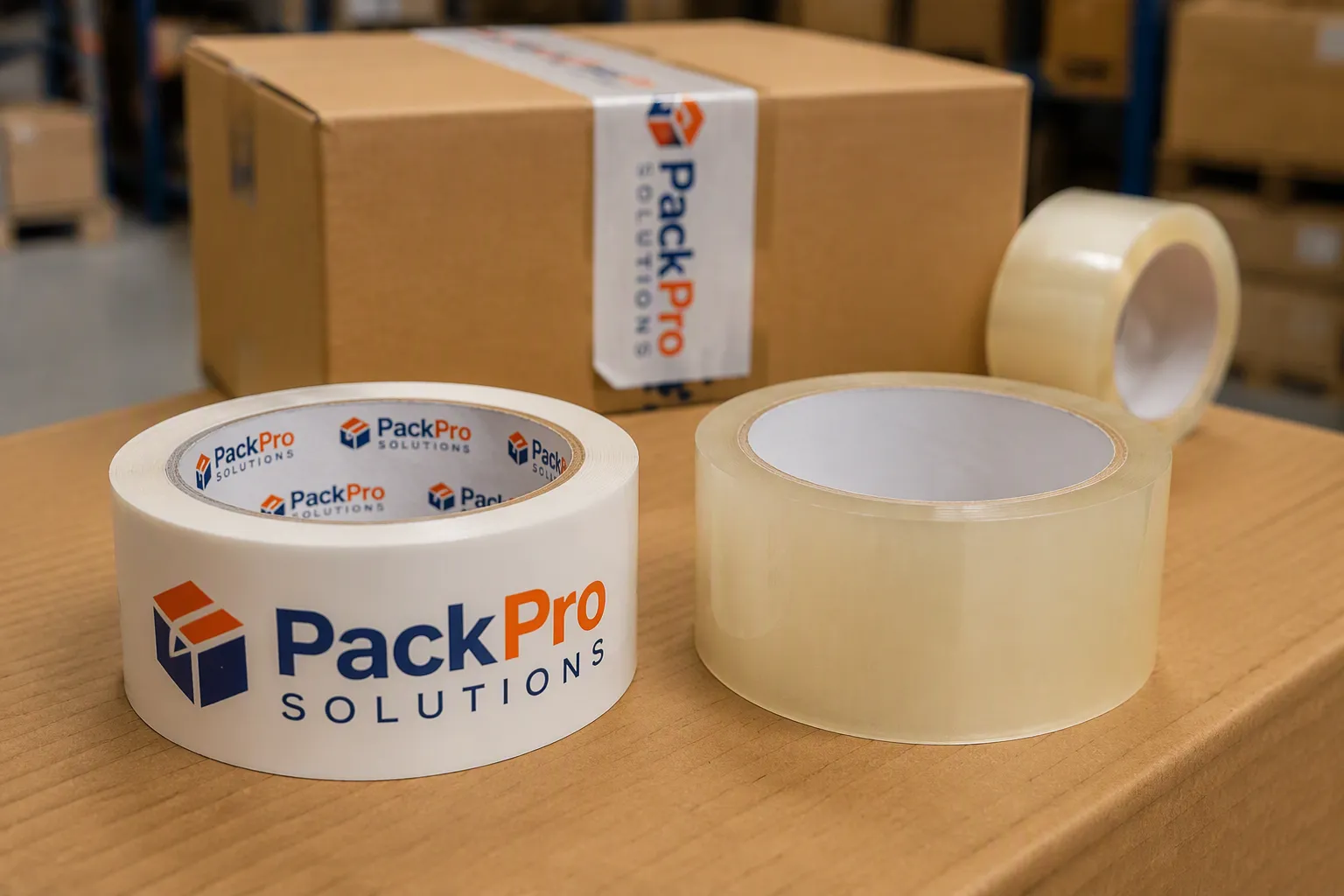
Opt for custom colored or printed tape if your business model relies on customer experience, premium positioning, or the secure transit of high-value goods. E-commerce brands, luxury retailers, and pharmaceutical distributors will find that the investment in branded, tamper-evident tape pays dividends in reduced shrinkage and enhanced brand equity. Gelly offers extensive customization, from 12mm to 1280mm widths, ensuring a perfect fit for any operational requirement.
When to Choose Standard Tape
Standard clear or brown tape remains the undisputed champion for pure cost-efficiency in high-volume, low-margin environments. If your operation focuses on B2B bulk freight, internal warehouse transfers, or commodities where aesthetic presentation and pilferage risks are minimal, standard tape provides the reliable, economical seal required to keep goods moving.
The core trade-off ultimately reflects your company's strategic priorities. Standard tape minimizes immediate overhead for utilitarian logistics, while colored BOPP tape transforms the shipping carton into a secure, branded touchpoint. Evaluate your margin structure, theft risk profile, and marketing objectives to make the most informed procurement decision.
Optimize Your Packaging Line Today
Not sure which tape suits your facility? Request a complimentary sample kit from Gelly to test our Colored and Standard BOPP tapes under your specific shipping conditions.
Get Free Samples NowFAQ
What thickness of colored BOPP tape should I select?
Gelly manufactures colored BOPP tape in thicknesses ranging from 45 to 90 microns. The 45-50 micron variants are perfect for standard retail carton sealing, while the heavier 70-90 micron options are engineered for demanding industrial bundling and heavy-duty corrugated boxes.
Does colored tape work with standard dispensers?
Absolutely. Our BOPP tape is engineered with a specialized low-static, no-bubble release coating. It functions flawlessly with both manual hand dispensers and high-speed automated case sealers without requiring any equipment upgrades or tension adjustments.
How does colored tape improve shipment security?
Colored and custom-printed tapes act as a tamper-evident seal. Because the specific color or logo is difficult for thieves to replicate, any attempt to slice and reseal the carton leaves obvious visual damage, alerting handlers and recipients to potential theft before the product is accepted.
Can I customize BOPP tape with my logo?
Yes. Businesses frequently print logos and brand messaging directly onto the tape. This effectively turns every outbound shipment into a mobile marketing asset, reinforcing brand identity throughout the entire delivery journey.


