


BOPP Printing Tape vs PVC Tape for Custom Branding
 Sep 22, 2026|
 View:2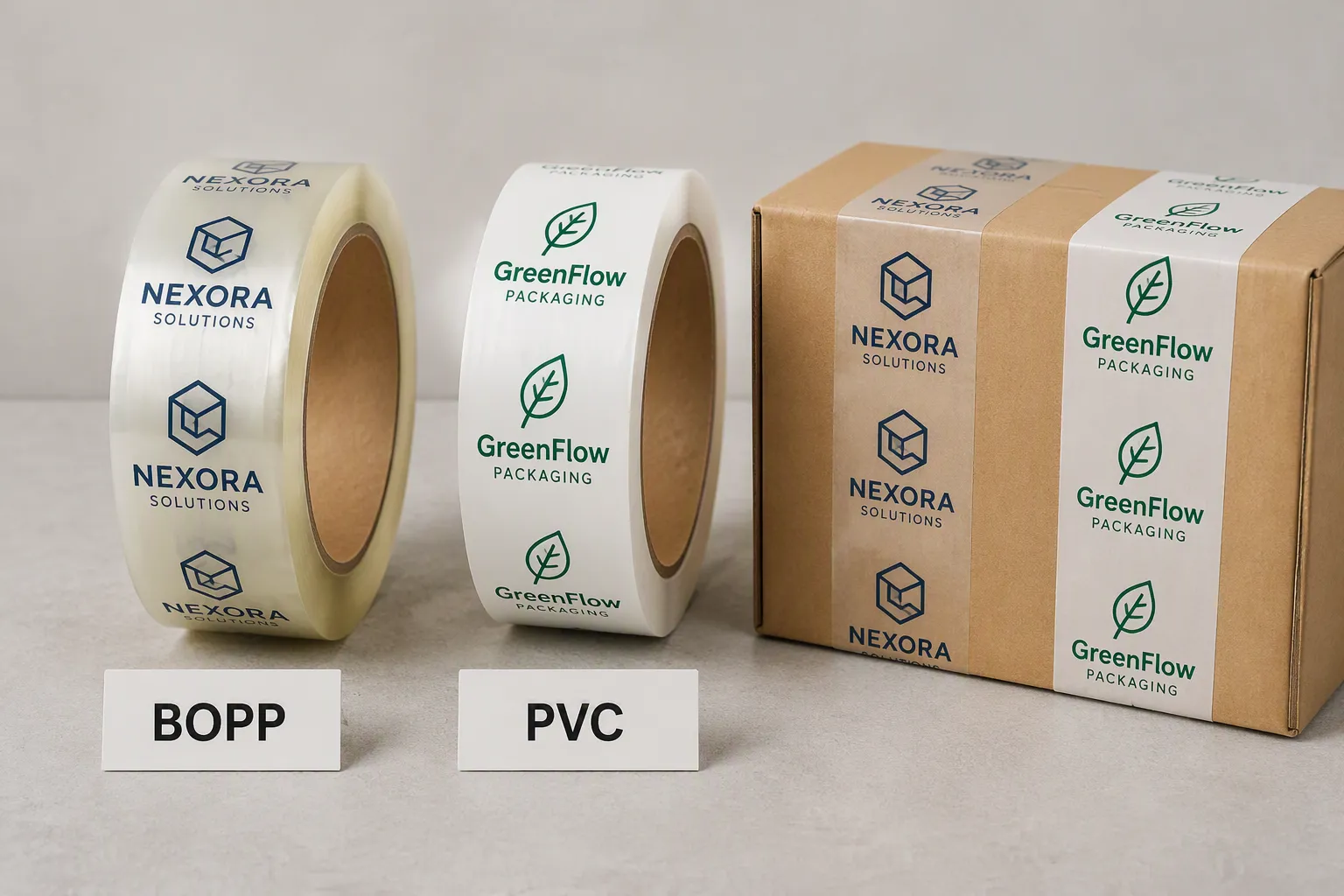
In today’s competitive e-commerce landscape, your packaging is your first physical touchpoint with customers. When sourcing custom branded tape, buyers are often caught between the flexibility of PVC and the reliability of BOPP. While PVC may offer high initial tack on rough surfaces, BOPP printing tape consistently outperforms it in print longevity, eco-compliance, and automated warehouse efficiency. This guide cuts through the marketing jargon, comparing BOPP, PVC, and lightweight cello tape across critical metrics like UV resistance, unwinding noise, and total cost of ownership, helping you make a profitable, future-proof packaging decision.
Key Takeaways
BOPP printing tape delivers superior print longevity, low unwinding noise, and stronger long-term adhesion compared to PVC tape.
At $2 to $5 per roll, custom BOPP tape offers a highly cost-effective branding solution without compromising on durability.
PVC tape suffers from plasticizer migration, leading to yellowing, sticky residue, and faded logos over time.
BOPP tape avoids the strict regulatory compliance risks associated with PVC's chlorine content and restricted plasticizers in global markets.
Gelly Tech offers free artwork layout support and rapid prototyping to ensure your custom printed tape perfectly matches your brand guidelines.
What Is BOPP Tape and Why It Matters for Branding
BOPP Printing Tape Defined
BOPP tape (Biaxially Oriented Polypropylene) is the industry standard for high-tensile carton sealing. The film is stretched in two directions to create a dense, exceptionally strong matrix that resists moisture and temperature fluctuations. Coated with a high-performance acrylic or hot-melt adhesive, it provides reliable holding power for shipping and logistics. In the packaging industry, BOPP is the go-to material for securing corrugated boxes while offering a premium canvas for custom branding.
Gelly Tech’s BOPP Printing Tape is engineered for enterprise-level packaging. With a total thickness of 30-65 microns and a tensile strength of at least 30 N/cm, it performs reliably in extreme environments from -40°C to 120°C. Backed by ISO, BSCI, SGS, and UL certifications, our tape ensures your packaging complies with strict global import standards. We offer flexible MOQs designed to support both growing e-commerce brands and high-volume operations, alongside comprehensive OEM customization for width, length, core size, and exact Pantone color matching.
The chemistry of the adhesive is crucial. BOPP tape typically utilizes acrylic, hot melt, or solvent-based adhesives. Acrylic adhesive, in particular, excels in aging and UV resistance. Unlike other adhesives that degrade, acrylic bonds maintain or even improve their holding strength over time. This ensures seals remain intact during extended warehouse storage and long export transit, preventing costly seal failures and simplifying quality control.
Key Features That Support Custom Branding
The ultra-smooth surface of BOPP film creates an ideal canvas for high-resolution flexographic printing. Custom printed tape supports crisp logos, complex text, and handling instructions in up to three vibrant colors. Every sealed box becomes a moving billboard, transforming a simple shipping expense into a powerful, cost-effective marketing tool. While premium kraft paper tape can cost $4-$12 per roll, BOPP printed tape delivers comparable brand impact at just $2-$5 per roll.
Furthermore, BOPP with acrylic adhesive keeps printed graphics looking fresh for months. Barcodes remain highly scannable through the tape, supporting warehouse efficiency and a premium unboxing experience. Whether you require manual application or machine-use jumbo rolls for automated tapers, BOPP provides the perfect balance of sealing strength and brand visibility.
BOPP Printing Tape Strengths for Custom Branding
Smooth Surface, Low Noise, and High-Quality Prints
The smooth surface of BOPP film ensures sharp, vibrant ink adhesion. Custom printed tape transforms every sealed box into a moving brand advertisement, reinforcing brand recognition with each shipment. But print quality is only half the story; application efficiency matters just as much.
BOPP tape is renowned for its quiet, smooth unwinding. In high-volume automated packaging lines, the low unwinding noise of BOPP significantly reduces warehouse noise pollution compared to the harsh, loud tearing sound of PVC tape. This creates a better working environment and ensures smooth feeding through automated carton sealers without snapping or static buildup.
With pricing typically running $2-$5 per roll, bopp tape remains the most cost-effective branding option for high-volume operations. A custom shipping tape at this price point delivers immense marketing value and operational efficiency with every package.
Strong Long-Term Adhesion and Environmental Resistance
Adhesion strength determines whether a seal holds during transit. While PVC may grab quickly on dusty surfaces, BOPP tape with acrylic adhesive forms a deep, permanent bond with corrugated fibers over time. It resists moisture, temperature swings, and rough handling, preventing package failures that can damage your brand's reputation.
Temperature resistance extending from -40°C to 120°C covers the entire logistics chain—from freezing winter freight to hot summer warehouses. Humidity does not weaken the acrylic bond. This environmental resistance also protects the printed design; moisture won't cause ink to run, and UV exposure won't rapidly fade colors. Your custom logo tape stays legible and secure from the packing line to the customer's doorstep.
Where PVC Tape Falls Short for Branding
Poor Print Longevity and Plasticizer Migration
PVC tape often looks vibrant on the roll, but its printed surface degrades quickly. PVC requires plasticizers to remain flexible, and these chemicals inevitably migrate to the surface over time. This migration dulls ink, causes severe yellowing, and leaves a sticky residue that attracts dust. While a premium UV-stabilized PVC with an overlaminate can last a few years outdoors, standard printed PVC tape simply cannot withstand the rigors of long-term warehousing.
In contrast, BOPP tape with standard acrylic adhesive offers excellent UV resistance and zero plasticizer migration. For interior logistics and standard shipping durations, printed BOPP stays crisp and legible. PVC also softens under heat, which can cause labels to shift or the tape to peel. BOPP film holds ink evenly and resists moisture, making it the undeniably safer choice for long-term brand preservation.
Strict Environmental and Regulatory Compliance Risks
PVC carries a heavy environmental and regulatory burden. Due to its chlorine content and the use of restricted plasticizers (like phthalates), PVC packaging is facing strict phase-outs and heavy regulations in regions like the European Union, Canada, and parts of Asia. As global sustainability standards tighten, greenwashing lawsuits are rising, and regulatory bodies are cracking down on toxic by-products.
The manufacturing and disposal of PVC introduce further hazards:
Substance / issue | Stage | Concern | Regulatory status |
|---|---|---|---|
Phthalates (DEHP, BBP, DBP, DIBP) | Plasticizers in soft PVC | Can migrate; reproductive and endocrine-disrupting effects | Restricted under REACH in certain uses |
Lead and cadmium | Stabilisers | Hazardous to health and environment | EU industry phased out by 2016 |
Dioxins and furans | Incineration | Unwanted emissions | Some Nordic countries do not permit PVC incineration |
These compliance risks directly shape brand perception. A business that ships globally with PVC risks supply chain disruptions and association with restricted materials. BOPP contains no chlorine and no harmful plasticizers, making sustainability claims much easier to defend. When comparing sealing performance and public image, BOPP tape delivers a safer, future-proof balance.
Drawbacks to Consider for Each Tape Type
BOPP Tape's Lower Conformability
To be entirely objective, BOPP tape provides excellent tensile strength but lower conformability. Its biaxially oriented film creates stiffness. This stiffness limits the tape's ability to stretch and conform to deeply recessed surfaces or sharply crushed box corners. If a box has severe irregularities, small gaps may form.
However, for standard, uniform corrugated boxes—which make up 95% of global shipping—Carton sealing with bopp tape delivers a consistent, rock-solid hold. For specialty, highly irregular packaging, operators simply need to ensure adequate surface contact or consider alternative reinforcement methods.
PVC Tape's Tendency to Yellow and Become Sticky
As mentioned, the plasticizers that give PVC its flexibility are also its Achilles' heel. The migration causes yellowing, sticky residue, and fused tape rolls in warm storage conditions. The adhesive transfers to hands, boxes, and work surfaces, creating a messy warehouse environment. Furthermore, the tape's long-term sealing performance degrades as the plasticizers leave the formulation. BOPP tape with acrylic adhesive avoids these problems entirely, maintaining its physical properties and clarity indefinitely.
BOPP Tape vs Cello Tape: Understanding the Application Gap
Industrial Packaging vs. Light-Duty Office Use
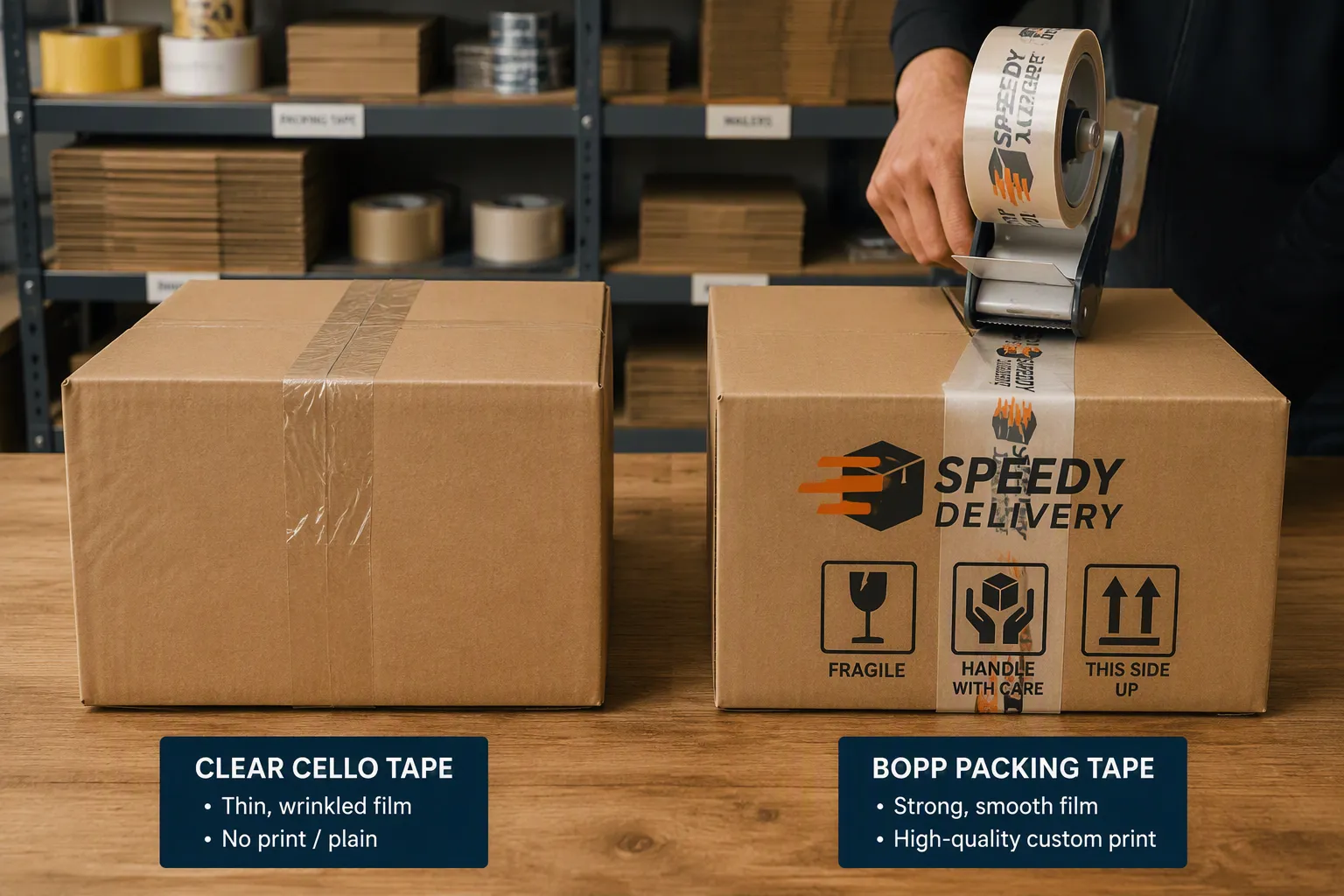
Buyers sometimes confuse industrial BOPP tape with lightweight cello tape (cellulose tape). The difference lies entirely in their intended application and structural integrity. Cello tape is designed for light-duty office tasks, gift wrapping, or sealing lightweight envelopes. It uses a much thinner, less oriented film that tears easily under tension.
In contrast, BOPP film undergoes biaxial orientation, creating a dense matrix capable of withstanding over 30 N/cm of breaking force. A heavy corrugated box sealed with cello tape will inevitably fail during transit. Custom printed tape on BOPP is engineered specifically for the rigors of logistics, ensuring your marketing message survives the shipping journey intact.
How to Choose Between BOPP, Cello, and Kraft Paper Tape
The decision matrix is simple: use cello tape for lightweight retail wrapping, and reserve BOPP for all carton sealing and shipping needs. What about eco-friendly alternatives like Kraft Paper Tape? While water-activated kraft paper tape offers excellent recyclability and a premium "green" aesthetic, it often costs significantly more ($4-$12 per roll) and lacks the inherent moisture resistance of BOPP.
For brands seeking the perfect balance of cost-effective branding, moisture resistance, and high-volume automated efficiency, BOPP remains the undisputed champion. Machine-use bopp packing tape feeds smoothly through automated sealers, providing consistent holding power that neither cello tape nor standard kraft tape can match at the same price point.
Head-to-Head Comparison: BOPP vs PVC Tape
Print Clarity, Noise, Durability, and Cost
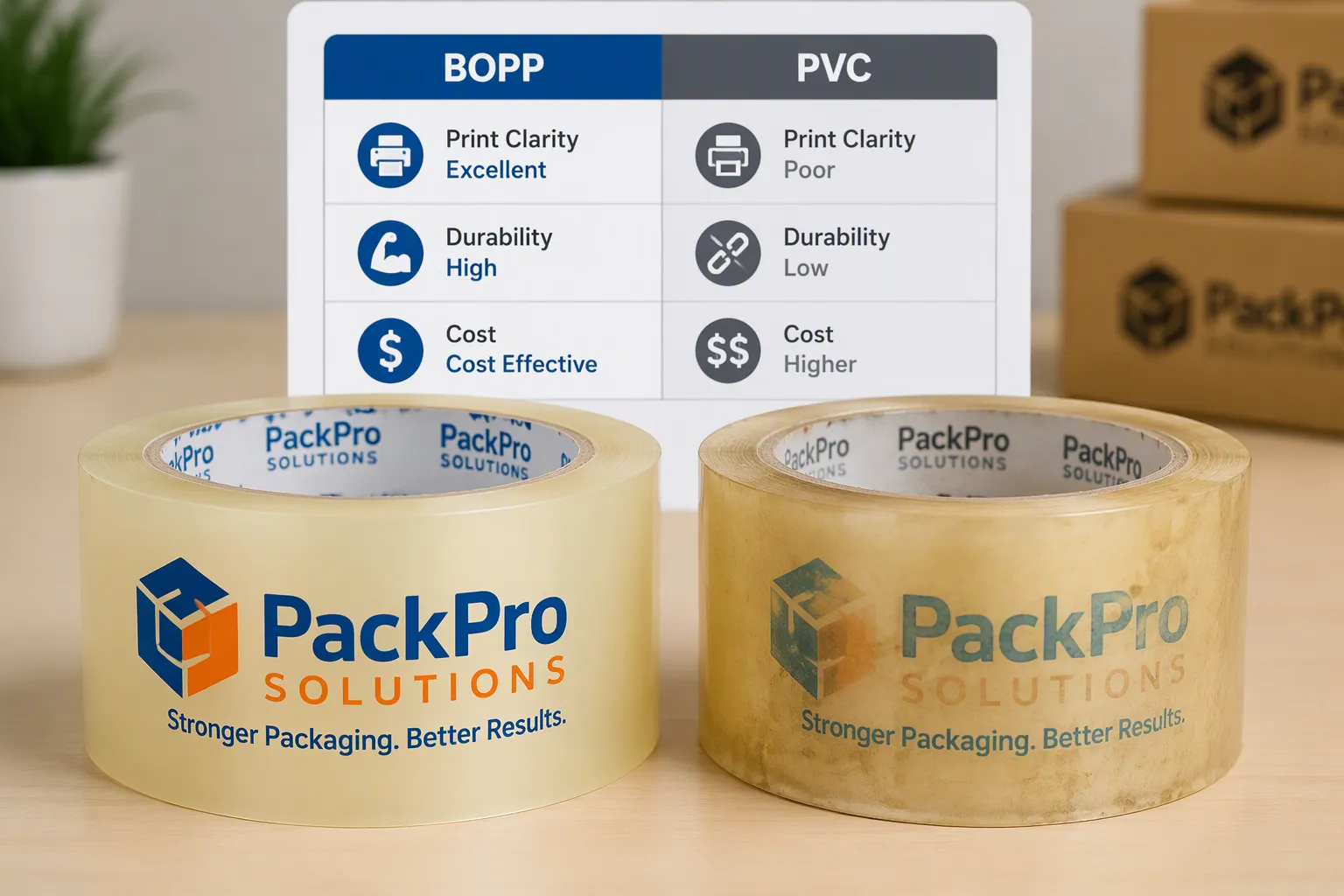
A direct comparison clarifies how these two tapes perform for custom branding and warehouse operations. The table below evaluates each across the factors that determine real-world value.
Factor | BOPP Tape | PVC Tape |
|---|---|---|
Print clarity | Sharp, vibrant graphics. Ink bonds evenly to the smooth surface. Colors stay legible for months without fading. | Initial clarity fades as plasticizers migrate. Yellowing dulls printed designs over time. |
Unwinding Noise | Quiet and smooth unwinding. Ideal for automated packaging lines and noise-sensitive warehouses. | Loud, harsh tearing sound. Contributes to warehouse noise pollution and operator fatigue. |
Adhesion Profile | Acrylic adhesive strengthens over time, forming a permanent, long-term bond with corrugated fibers. | High initial grab on dusty surfaces, but holding power degrades as plasticizers migrate out of the film. |
Cost per roll | $2–$5. Highly affordable for high-volume operations. Consistent performance reduces waste. | Generally higher. UV-stabilized versions cost more. Lower durability may require double-taping. |
The table highlights a clear operational advantage. BOPP delivers superior print quality, quiet automated application, and long-term durability at a lower price point. PVC tape struggles to maintain appearance during long-term storage and introduces noise pollution in the warehouse. The cost advantage of BOPP makes it the most economical choice for consistent, high-volume carton sealing.
Eco-Friendliness and Application Suitability
Environmental impact and application range further separate these two materials.
Factor | BOPP Tape | PVC Tape |
|---|---|---|
Eco-friendliness | Recyclable polypropylene film. Contains no chlorine or restricted plasticizers. Supports global sustainability goals. | Contains restricted additives. Facing strict phase-outs in the EU, Canada, and parts of Asia. |
Application suitability | Ideal for flat carton sealing on standard boxes. Feeds perfectly through automated bopp packing tape machines. | Suitable for irregular surfaces due to high conformability. Poor fit for high-speed automated lines. |
The environmental differences carry practical weight. Custom printed packaging tape on BOPP supports corporate sustainability goals and avoids the regulatory compliance risks associated with restricted PVC materials. BOPP handles the vast majority of packaging tasks effectively, feeding smoothly through automated machinery while maintaining its adhesive properties through long production runs. PVC tape offers flexibility for curved surfaces, but this advantage matters only for specialty packaging scenarios.
BOPP printing tape wins decisively on print longevity, automated efficiency, cost, and eco-compliance. These factors make it the optimal choice for modern custom branding projects. While PVC tape still holds a niche for specific applications requiring extreme initial grab on dusty, irregular surfaces, BOPP provides a far superior overall balance for global shipping and brand preservation.
For standard carton sealing, BOPP tape delivers reliable performance at $2-$5 per roll. Printed tape on BOPP film keeps your logos sharp, your seals secure, and your warehouse quiet.
Ready to elevate your unboxing experience and protect your shipments? Contact Gelly Tech today for a free sample roll and a custom artwork mockup. Let our packaging experts help you choose the perfect printed BOPP tape to scale your brand globally.
FAQ
What is BOPP tape made of?
BOPP tape uses biaxially oriented polypropylene film as its backing. Manufacturers stretch this film in two directions to increase strength and clarity. An adhesive layer—typically acrylic or hot melt—is applied to one side. Gelly Tech's BOPP Printing Tape combines this high-tensile film with premium acrylic adhesive for reliable, long-lasting sealing performance.
Can BOPP tape be custom printed with a company logo?
Yes. BOPP film accepts logos, text, and designs in up to three colors via high-resolution flexographic printing. The smooth surface produces sharp, vibrant graphics that stay legible throughout shipping. Gelly Tech supports full OEM customization, including exact Pantone color matching, width, length, and core size adjustments.
How does BOPP tape perform in extreme temperatures?
Quality BOPP tape resists temperatures from -40°C to 120°C. This range covers freezing winter freight and hot summer warehouses. The acrylic adhesive maintains its bond strength across these conditions, ensuring moisture and humidity do not weaken the seal or cause the printed graphics to smear.
Is BOPP tape environmentally friendly?
BOPP tape uses recyclable polypropylene film and contains no chlorine or harmful plasticizers. This composition avoids the strict regulatory restrictions facing PVC tape in regions like the EU and Canada. Gelly Tech's BOPP Printing Tape holds ISO, BSCI, SGS, and UL certifications, supporting sustainability goals for eco-conscious global shipping programs.
How much does custom printed BOPP tape cost?
Printed BOPP tape typically costs $2-$5 per roll, depending on volume and customization. Custom kraft paper tape runs $4-$12 per roll by comparison. This price difference makes BOPP tape a highly cost-effective branding option for high-volume operations, offering both sealing strength and brand visibility at an affordable price point.